معرفی
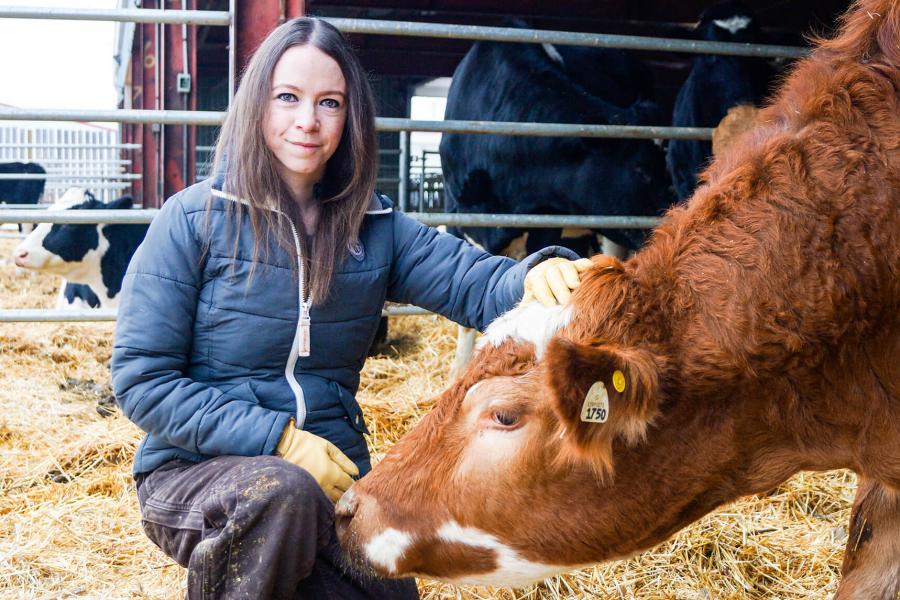
Dr. Emma J. McGeough serves as an Associate Professor in the Department of Animal Science within the Faculty of Agricultural and Food Sciences at the University of Manitoba's Fort Garry campus, where her work bridges animal production systems and environmental sustainability.
Her academic foundation includes:
- BSc Agriculture (Animal Science) from University College Dublin, Ireland
- PhD Animal Science (Ruminant Nutrition) from University College Dublin, Ireland
Research focuses on critical intersections of livestock production and ecological stewardship, particularly forage utilization in cattle systems, quantification of enteric methane emissions, and comprehensive life cycle assessments of livestock products. Her investigations into environmental-economic tradeoffs drive innovations for carbon-neutral animal agriculture, addressing global food security challenges through scientifically rigorous sustainability metrics. Current work emphasizes scalable carbon footprinting methodologies applicable to diverse ruminant production models.
Her exceptional contributions have earned recognition including:
- Faculty of Agriculture and Food Sciences Excellence in Teaching Award (2025)
- University of Manitoba Merit Award for Teaching, Research and Service (2023)
- NACTA Teaching Award of Merit (2023)
- Canadian Society of Animal Science Extension and Public Service Award (2022)
- University of Manitoba Professor of the Year – Degree (2020/2021)
- Terry G. Falconer Memorial Rh Institute Emerging Research Award (2018)
- Canadian Society of Animal Science Young Scientist Award (2014)
Dr. McGeough actively shapes future agricultural leaders through courses including ANSC 2500 Animal Production, AGRI 3300 Horse Production and Management, and co-taught ANSC/PLNT 4410 Grassland, Animal and Environment. Her mentorship extends to graduate student supervision and curriculum development focused on sustainable production systems. While specific grant details aren't provided, her award portfolio indicates substantial research funding for environmental livestock studies. Her leadership in sustainability metrics positions her at the forefront of next-generation agricultural science initiatives addressing climate change impacts on food systems.