معرفی
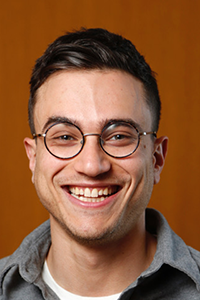
Emile Gluck-Thaler is an Assistant Professor in the Department of Plant Pathology at the University of Wisconsin–Madison, within the College of Agricultural and Life Sciences. His research integrates molecular genetics, evolutionary genomics, and data science to investigate fungal interactions with plants and animals, with implications for food security and public health.
Education:
- PhD in Plant Pathology, The Ohio State University
- BS in Life Sciences with Microbiology Specialization, McGill University, Canada
- Marie Skłodowska-Curie Fellow, University of Neuchâtel, Switzerland
- Postdoctoral Researcher, University of Pennsylvania
- Postdoctoral Researcher, University of Pittsburgh
His research focuses on fungal evolution, particularly the discovery of “Starships”—giant transposons that carry functional genes and enable horizontal gene transfer across fungal species. These elements challenge traditional views of genome evolution and have significant implications for the emergence of fungal pathogens. His lab combines experimental molecular biology with computational genomics to uncover the mechanisms behind fungal pathogenesis and symbiosis.
His recent publications explore transposon-mediated genome innovation, horizontal gene transfer, and eukaryotic diversity, revealing new dimensions in fungal biology. These works appear in leading journals such as mBio, Trends in Genetics, and Nucleic Acids Research.
Scientific Awards:
- No awards explicitly mentioned.
Dr. Gluck-Thaler teaches Plant Pathology/Botany 123: Plants, Parasites and People, and mentors students in the Fungal Interactions Lab. His lab is actively pursuing grants and collaborative research to further understand the role of mobile genetic elements in fungal adaptation. He leads a dynamic research group that emphasizes creativity, collaboration, and rigorous scientific training.
Labs and Research Teams: He leads the Fungal Interactions Lab, which is dedicated to uncovering the genetic mechanisms underlying fungal interactions with hosts, using cutting-edge molecular and computational approaches.