معرفی
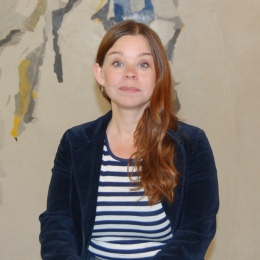
Elsa Andersson is a doctoral student and university lecturer at Malmö University's Faculty of Learning and Society, Department of Childhood, Education and Society (BUS). She also works as a preschool teacher and special education teacher.
Her educational background includes a master's degree in special education, which forms the foundation for her current research and teaching activities.
Dr. Andersson's research focuses on issues of normality and power dynamics in educational settings, particularly examining how children's lives are organized within institutional frameworks. Her work critically engages with the political dimensions of early childhood education, investigating how policies shape children's everyday experiences in preschool environments. She employs discourse analysis and theoretical frameworks from Foucault to examine how physical environments function as discursive practices that govern children's freedom and agency. Her research reveals how seemingly neutral educational environments subtly shape children's experiences of freedom and self-determination.
Her recent publications reveal a consistent focus on the relationship between physical environments and educational practices in Swedish preschools. Through analysis of historical documents spanning from 1969 to 2021, she traces evolving discursive norms about what constitutes an 'ideal' learning environment for children. Her work demonstrates how these environments subtly shape children's experiences of freedom, shifting from freedom to participate in culture to freedom to transform culture.
As a member of the Historical-Political Studies of Childhood, Education and Society (HPS) research group, Dr. Andersson contributes to interdisciplinary scholarship that examines education and upbringing in relation to broader societal structures and historical contexts.
While specific grant information isn't provided in the available materials, her research appears to be centrally concerned with understanding how power operates through educational environments, with significant implications for how we conceptualize children's agency in institutional settings. Her dual role as both researcher and practitioner (as a preschool and special education teacher) provides valuable insights that bridge theory and practice in early childhood education.