معرفی
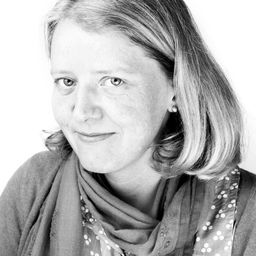
Elizabeth Carnegie is a faculty member at Northumbria University, where she teaches tourism and heritage. She has previously taught at Sheffield University and worked as a curator before transitioning into academia. Her interdisciplinary research draws from sociology, anthropology, material culture studies, and social history, focusing on the body as a site of memory and the role of tourists in memory spaces.
Her research interests include:
- The cultural significance of tattoos in seafaring communities
- Museums in post-communist Eastern Europe, particularly monumental statuary as 'frozen bodies'
- Gentrification and heritage aesthetics, as seen in her presentation 'All the Pink Houses'
- The heritagization of cultural practices and memory in tourism contexts
The most recent articles reflect a strong trend in critical heritage studies, memory politics, and the sociocultural dimensions of tourism. Her work frequently examines how historical narratives are constructed and contested in museum and heritage spaces, especially in post-socialist and post-industrial contexts. She often collaborates with scholars like J. Kociatkiewicz and Derek Bryce, contributing to high-impact journals such as Annals of Tourism Research and Journal of Sustainable Tourism.
Her notable scientific award includes:
- Emerald Literati Award for Excellence: Best Paper Award 2018
Elizabeth Carnegie has advised or collaborated on research involving cultural memory, music communities, and arts organizations. While no specific grants are mentioned, her ongoing projects suggest sustained funding and institutional support. She is actively engaged in academic discourse through publications and conference participation.
She is involved in research teams focusing on:
- Critical heritage and memory studies
- Post-communist cultural transitions
- Curatorial practices and representation