معرفی
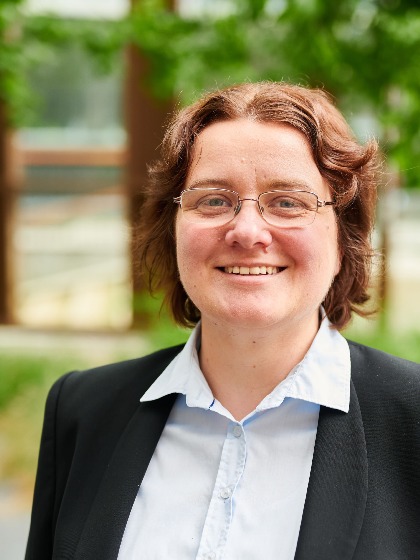
Elisabeth Wilhelm is an Assistant Professor in Control of Robotic Systems for Assistance and Rehabilitation at the University of Groningen's Faculty of Science and Engineering, specializing in robotics for rehabilitation and assistive technologies through the Department of Discrete Technology and Production Automation.
Education:
- PhD in Mechanical Engineering, Karlsruhe Institute of Technology (2015)
- Diploma in Mechanical Engineering, Karlsruhe Institute of Technology (2012)
Research Focus: Her work pioneers artificial sensory stimulation for neurological and sleep disorders by integrating microtechnology, robotics, and AI. She develops closed-loop human-machine interaction systems using bio-signal processing and machine learning to enable robots to dynamically respond to physiological states, with strong emphasis on real-time bio-feedback applications.
Publication Trends: Recent work (2024-2025) demonstrates interdisciplinary convergence of deep learning with biomedical engineering, particularly in gait analysis using sparse sensor data, robotic interventions for sleep apnea, and wearable-based monitoring of bruxism/stress. Her research consistently bridges machine learning with practical rehabilitation solutions through multi-institutional collaborations.
Scientific Recognition:
- Internationale Forschungspreis zum Primären Schnarchen (2018)
- DAAD Fellowship for Postdoctoral Researchers (2016)
- Deutscher Studienpreis der Körberstiftung for PhD thesis (2016)
Professional Engagement: Maintains active external roles including Scientific Advisory Board membership for EMMA (2022-2024), reviewing for the Velux Foundation, and guest lectures for the German Sleep Society. Previously held postdoctoral positions at ETH Zurich's Sensory-Motor Systems Lab (2016-2020) and Imperial College London (2015-2016).
Research Infrastructure: Leads projects within Groningen's Engineering and Technology Institute (ENTEG), maintaining ongoing collaborations with ETH Zurich's Sensory-Motor Systems Lab and international clinical partners for translational sleep disorder research.