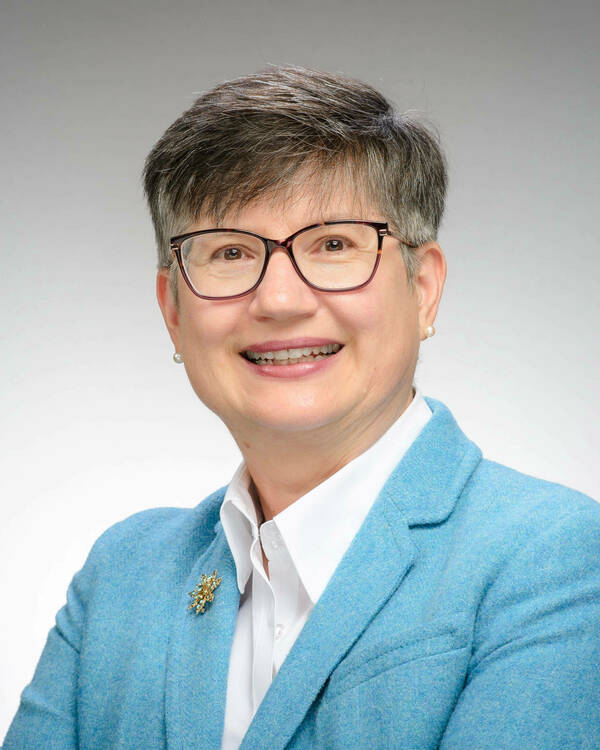
معرفی
Elisabeth Köll serves as Professor and William Payden Collegiate Chair at the University of Notre Dame, concurrently holding the position of Department Chair. Her scholarly work centers on Chinese business, economic, and social history from the mid-19th to late 20th century, with particular emphasis on institutional transformations during China's evolution from empire to nation-state across Asian and global contexts.
Her academic foundation includes undergraduate studies at the University of Bonn (Germany) and Fudan University, Shanghai, followed by a D.Phil. in Chinese Business History from the University of Oxford as a Rhodes Scholar.
Köll's research program investigates the interplay between business institutions and socioeconomic change in modern China. Key projects include analysis of railroad systems as economic and administrative institutions (culminating in her 2019 monograph Railroads and the Transformation of China), examination of informal finance mechanisms like pawnbroking, and reconstruction of 1920s business environments through Western archival materials. Her work consistently bridges Chinese history with global economic networks, demonstrating how local institutions adapted to transnational forces while shaping China's developmental trajectory.
Publication analysis reveals a progression from firm-level case studies (e.g., From Cotton Mill to Business Empire, 2003) toward broader institutional analyses, with recent works (2022-2024) increasingly emphasizing China's integration into global knowledge production systems and infrastructure's role in economic history, as evidenced by her co-edited volume Age of Exploration (2024).
Her distinguished recognition includes:
- Rhodes Scholarship
While specific student advising records remain unenumerated in source materials, Professor Köll's dual leadership roles as Department Chair and active researcher—evidenced by ongoing book projects and editorial initiatives—indicate substantial scholarly mentorship responsibilities and sustained research funding. Her collaborative work with scholars like Elisabeth Kaske on the 2024 volume demonstrates engagement with interdisciplinary research communities.
No dedicated research laboratories or formal team structures are referenced in available documentation; her scholarship appears centered on archival research and theoretical analysis conducted through individual investigation and selective academic collaborations.