معرفی
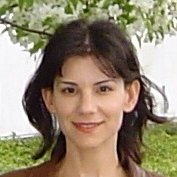
Dr. Eleni Akrida serves as an Associate Professor in the Department of Computer Science at Durham University and holds the position of Deputy Executive Dean (Academic Student Experience) in the Faculty of Science. Since joining Durham in 2019, she has significantly contributed to academic leadership, including a term as Director of Undergraduate Studies from 2020 to 2025, shaping curriculum development and student experience across the department.
Her academic foundation includes a Mathematics degree from the University of Patras, Greece, followed by Computer Science studies at the University of Liverpool, UK, establishing her interdisciplinary expertise in theoretical and applied computer science.
Dr. Akrida's research bridges cutting-edge Computer Science education and theoretical algorithms. She pioneers pedagogical frameworks for abstraction skill development and investigates neurodivergent student experiences in CS education. Concurrently, her theoretical work explores probabilistic algorithms, graph complexity, and dynamic network optimization, yielding foundational insights in temporal graph theory and algorithmic game theory.
Analysis of her publication trajectory reveals a strategic evolution: recent work (2023-2025) emphasizes educational innovation through frameworks for abstraction skills and neurodivergent inclusion studies, complemented by NLP contributions to plagiarism detection. Earlier research (2014-2021) established her authority in temporal graph algorithms, with seminal journal publications on connectivity, exploration, and game-theoretic models in dynamic networks.
Her research impact is amplified through competitive grant funding:
- Exploring the Experiences of Neurodivergent Students in Computer Science Higher Education in the UK (CPHC Special Project, 2025/26)
- A Theoretical Computer Science Commons in the hybrid era (CPHC Special Project, 2022/23)
Dr. Akrida actively mentors postgraduate researchers including Saira Richardson and leverages her leadership roles to drive educational innovation. She contributes to Durham's Pedagogical Innovations in Computer Science and Algorithms and Complexity research groups, fostering interdisciplinary collaborations that bridge theoretical rigor with practical educational applications.