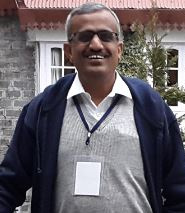
معرفی
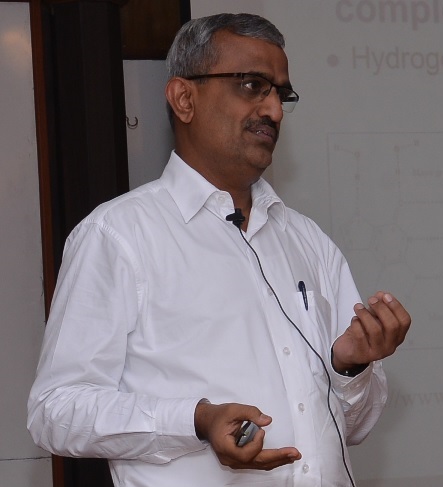
Professor Elangannan Arunan is a distinguished academic at the Indian Institute of Science (IISc), Bangalore, where he serves as Professor and Chair of the Department of Inorganic and Physical Chemistry. With a career spanning over three decades at IISc, he has established himself as a leading researcher in molecular spectroscopy, hydrogen bonding, and chemical kinetics.
- PhD in Physical Chemistry from Kansas State University (1991)
- Professor at IISc since 2009 (previously Associate Professor and Assistant Professor)
- Chairman of the Department since October 2018
- Member of multiple editorial boards including Journal of Molecular Spectroscopy
Professor Arunan's research primarily focuses on spectroscopy and dynamics of molecules and clusters, chemical kinetics, shockwave interactions, and intermolecular bonding. His work has significantly advanced our understanding of hydrogen bonding, leading to his chairmanship of the IUPAC Task Group that redefined hydrogen bonding in 2011. He pioneered the development of microwave spectroscopy in India, building the country's only pulsed nozzle Fourier transform microwave spectrometer.
His recent publications demonstrate continued excellence across multiple domains including molecular spectroscopy, astrochemistry, and chemical bonding theory. Professor Arunan has made seminal contributions to defining 'carbon bonds' analogous to hydrogen bonds and has established shock tube facilities for chemical kinetics research in collaboration with the Aerospace Engineering Department at IISc.
- Fellow of the National Academy of Sciences, India (2015)
- Fellow of the Royal Society of Chemistry (2014)
- National Prize for Chemical Spectroscopy and Molecular Structure (2019)
- Alumni Award for Excellence in Research for Science (2020)
Professor Arunan has successfully mentored numerous students and researchers, with current advisees including M. Kiran Singh, Kabir R. Kumbhar, and Govinda Prasad Khanal. His laboratory maintains active collaborations with institutions worldwide and has secured significant sponsored projects related to molecular interactions and shockwave research.