معرفی
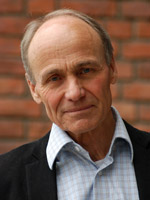
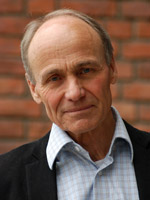
Eivind Osnes is a Professor in the Department of Physics at the University of Oslo, Norway, where he has held a faculty position since 1985. He previously served as Department Chair during two periods (1991-1997 and 2003-2008). His academic career began with a Docent position at the same institution in 1977. Osnes is a member of the Norwegian Academy of Science and Letters and was awarded the King's Medal of Merit in gold in 2009 for his contributions to theoretical nuclear physics.
His primary research focuses on theoretical nuclear physics, particularly in the areas of nuclear structure, shell model calculations, and effective interactions. Osnes has made significant contributions to understanding nucleon-nucleon interactions, pairing correlations in nuclear systems, and the application of realistic effective interactions to various nuclear systems. His work spans from fundamental theoretical developments to practical applications in nuclear spectroscopy and the study of exotic nuclei, including extensive research on tin isotopes and doubly-magic nuclei like 100Sn.
Analysis of Osnes' publication record spanning over four decades reveals consistent focus on developing and applying microscopic nuclear models. His research shows evolution from early work on particle-rotor models to sophisticated large-scale shell model calculations, particularly for tin isotopes and other regions near shell closures. A notable trend is his sustained collaboration with researchers like Morten Hjorth-Jensen and Torgeir Engeland, producing influential work on effective interactions and nuclear many-body theory that bridges fundamental physics with computational implementations.
His scientific recognition includes:
- Member of the Norwegian Academy of Science and Letters
- King's Medal of Merit in gold (2009)
While specific details about research grants and student supervision aren't explicitly documented in the provided materials, Osnes' extensive publication record with numerous collaborators suggests significant research leadership. His work has involved both theoretical developments and computational implementations that would typically require substantial research funding and student involvement in nuclear physics research. His long-standing position at the University of Oslo indicates deep integration within the institution's nuclear physics research environment, contributing to theoretical nuclear structure physics through both individual scholarship and collaborative efforts.