معرفی
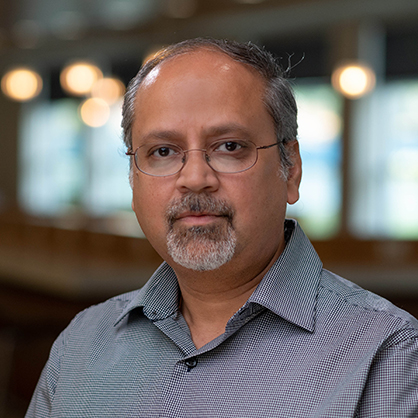
Dustin Mink is a Research Professor in the Department of Cybersecurity and Information Technology at the University of West Florida, part of the Hal Marcus College of Science and Engineering. He is also affiliated with the National Intelligence University and the Joint Cyber Analysis Course, contributing to military and intelligence cybersecurity education. His work bridges academic research, government collaboration, and practical defense applications.
Education:
- Ph.D. in Computing, University of South Alabama
- M.S. in Computer Science, University of West Florida
- B.S. in Computer Science, University of West Florida
- A.A., Daytona State College
Dustin Mink's research focuses on cybersecurity, artificial intelligence, and machine learning, particularly in detecting rare cyber attacks using resampling techniques, visualizing MITRE ATT&CK tactics, and securing critical infrastructure like the FAA's NextGen ADS-B system. His work leverages big data frameworks and Spark-based machine learning for real-time intrusion detection. He has developed the UWF-ZeekData22 dataset to support reproducible cybersecurity research.
His recent publications (2021–2023) reflect a strong trend in AI-driven cybersecurity, with emphasis on imbalanced data handling, threat visualization, and aviation system protection. These works appear in journals such as Computers, Future Internet, Sensors, and Big Data and Cognitive Computing.
Dr. Mink has secured and contributed to major research grants, including a $7.1M DoD Strategic Capabilities Office grant and a $0.5M NCAE-C grant, where he served as Co-PI on multiple projects related to risk detection, industrial control system security, and cybersecurity workforce development. He mentors students and professionals through teaching and training programs.
He teaches courses such as Ethical Hacking, Cyber War Gaming, and Secure Software Development at UWF, and contributes to national cybersecurity education through GenCyber and FCC-funded workforce initiatives.
Dr. Mink leads and collaborates on interdisciplinary research teams focused on creating technical solutions through IRADs, contract proposals, and TTOs. His lab-like efforts involve building datasets, detection systems, and AI models for cyber defense, often in collaboration with government and defense agencies.