معرفی
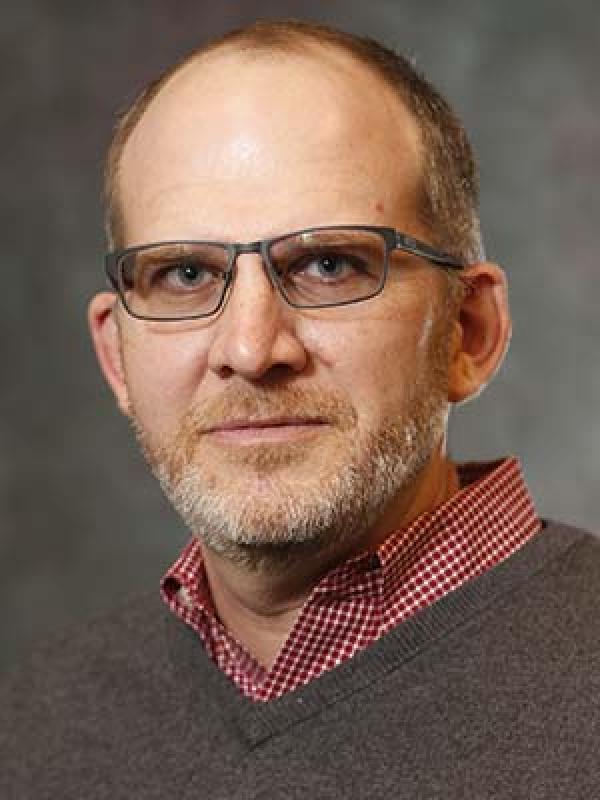
Duncan Graham serves as Distinguished Professor, Associate Principal, and Executive Dean of the Faculty of Science at the University of Strathclyde, positions he has held following his 2002 appointment as lecturer and 2004 promotion to professor. His institutional leadership extends to significant roles within the Royal Society of Chemistry, including Analytical Division President (2017-2020), Analytical Chemistry Trust Fund Trustee (2017-2020), and Publishing Board Chair with Trustee service (2020-2024).
Professor Graham's research pioneers the integration of nanoparticle chemistry with surface-enhanced Raman scattering (SERS) spectroscopy to develop novel diagnostic platforms for life science and clinical applications. His work specifically targets biomarker detection across DNA, RNA, proteins, and small molecules, with notable translational impact demonstrated by a SERS-based method for drug-induced liver injury biomarkers currently undergoing clinical trials. This fundamentally interdisciplinary approach requires close collaboration with non-chemical disciplines to address real-world clinical challenges and advance point-of-care diagnostics.
His exceptional contributions have been recognized through:
- Fellowship of the Royal Society of Edinburgh (2007)
- RSC Corday-Morgan Prize (2009)
- Royal Society Wolfson Merit Award (2010)
- Coblentz Society Craver Award (2012)
- Society for Applied Spectroscopy Fellows Award (2012)
- RSC Theophilus Redwood Prize (2016)
- FACSS Charles Mann Award (2017)
- RSC Interdisciplinary Prize (2025)
Professor Graham has mentored over 70 PhD students and 40 postdoctoral researchers while securing substantial research funding that has produced more than 300 publications and 17 patents. He emphasizes that scientific progress accelerates within inclusive research environments that foster open idea exchange and experimental validation. His leadership philosophy centers on creating supportive spaces where researchers develop professional networks while advancing ambitious interdisciplinary projects.
The research group operates on a core principle of meaningful cross-disciplinary collaboration, actively partnering with clinical and life science experts to identify critical challenges addressable through chemical innovation. This philosophy has directly enabled translational breakthroughs like the liver injury diagnostic technology currently moving toward clinical implementation, demonstrating how fundamental chemical advances can solve pressing healthcare problems through strategic partnerships.