معرفی
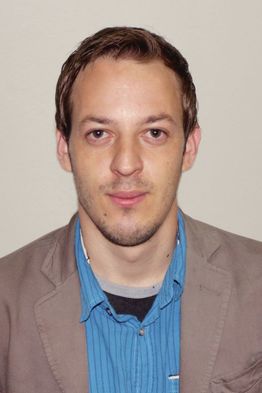
Dr. Dragan Matić serves as an Associate Professor in the Department of Computer and Information Sciences at the Faculty of Science and Mathematics, University of Banja Luka. His academic career spans over two decades with significant contributions to computational science.
- Graduate Mathematician, Faculty of Science and Mathematics, Novi Sad (2001)
- Master Mathematician, Faculty of Science and Mathematics, Novi Sad (2008)
- Doctor of Mathematics, Faculty of Mathematics, Belgrade (2013)
Professor Matić's research focuses on the intersection of computer science and biology, with particular emphasis on developing computational methods for biological network analysis. His work bridges theoretical computer science with practical applications in bioinformatics, especially in the areas of graph theory applied to protein-protein interaction networks. He has developed innovative algorithms using variable neighborhood search, genetic algorithms, and mixed-integer programming to solve complex combinatorial problems in biological contexts.
His publication record shows a consistent trajectory of high-quality research, with recent work (2022-2024) demonstrating continued productivity and relevance in computational biology. The articles reveal a strong focus on applying graph theory and combinatorial optimization to biological problems, particularly in protein network analysis, with increasing interdisciplinary collaboration across Europe.
Professor Matić has received research support through multiple significant projects:
- Connecting Education and Research Communities for an Innovative Resource Aware Society (COST Action EU Project, 2020-2024)
- Development of artificial intelligence methods for solving computational biology problems (2020-2021)
- Development and application of combinatorial optimization methods and machine learning in bioinformatics (2019-2020)
- General Education Project in Bosnia and Herzegovina (Save the Children - USAID, 2019-2023)
He teaches courses including Introduction to Web Technologies, Programming Basics 2, Information Technology and Society, Computer Science Teaching Methodology, Human-Computer Interaction, and Bioinformatics at the master's level in biology. His teaching reflects his research interests, connecting theoretical computer science with practical applications.