معرفی
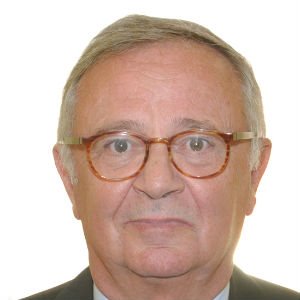
Donato Masciandaro is a Full Professor of Economics at the Department of Economics, Università Bocconi. He holds the Chair in Economics of Financial Regulation since 2005 and has served as Director of the Baffi Centre since 2018. Previously, he was Head of the Department of Economics from 2013–2017 and 2008–2010. He is a Member of the SUERF Management Board since 2011 and an Associated Editor of the Journal of Financial Stability since 2010. His professional engagements include consulting for the European Parliament, Inter-American Development Bank, World Bank, and United Nations, as well as a Visiting Scholar at the IMF Institute.
His research focuses on Monetary Policy, Financial Regulation, and Illegal Financial Markets. His work explores central bank governance, the political economy of monetary policy, anti-money laundering strategies, and the impact of organized crime on financial systems. Recent studies include analyses of helicopter money in pandemic contexts, populism’s influence on banking policies, and the effectiveness of financial intelligence units in combating illicit transactions.
Masciandaro’s recent publications (2020–2022) investigate topics such as central bank independence, anti-money laundering frameworks, and the historical parallels of modern monetary policies during crises. His interdisciplinary approach bridges macroeconomic theory with practical regulatory challenges, addressing both theoretical and empirical dimensions of financial stability.
In addition to his academic contributions, Masciandaro has advised international organizations and governments on financial regulation and monetary policy. His editorial work at the Journal of Financial Stability and his role in the SUERF network reflect his commitment to advancing policy-relevant research. He has also contributed to impactful consultancy projects for global institutions such as the World Bank and United Nations.
Masciandaro leads the Baffi Centre, a hub for research in finance and economics, fostering collaboration among academics, policymakers, and practitioners.