معرفی
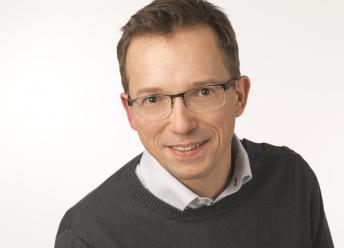
Prof. Dogan Keles serves as a Professor and Head of Section in the Department of Technology, Management and Economics at Technical University of Denmark (DTU). His research focuses on energy economics, energy system modeling, and climate policy, contributing to UN Sustainable Development Goals related to decarbonization and renewable energy adoption.
Education:
- PhD in Economics, May 2013
- Industrial Engineering and Management, October 1999 to March 2006 (Awarded March 2006)
Research Interests: Dogan Keles investigates sustainable energy transitions, emphasizing emission reduction policies, renewable integration (e.g., offshore wind and solar), district heating optimization with heat pumps, and hydrogen infrastructure planning. He also explores cross-border energy trade dynamics, smart charging for EVs, and the socio-economic impacts of grid tariff designs. His work combines advanced modeling techniques like stochastic optimization and bi-level analysis to address real-world challenges in energy systems.
Recent Research Trends: His publications (43 total) highlight contributions to emission policy effectiveness, gas-saving strategies via renewables, and hydrogen infrastructure development. Key themes include decarbonization pathways for district heating systems, offshore energy market design, and the interplay between consumer behavior and low-carbon technology adoption.
Scientific Awards: None listed in the provided information.
Advising and Grants: As a main supervisor, Keles leads PhD projects on electricity market bidding strategies, Power-to-X markets, hydrogen regulation, data center energy integration, and maritime green fuels. His research is supported by grants addressing energy transition challenges, including funding for projects on offshore wind financing and energy hub optimization. He also collaborates internationally, with activities focused on Switzerland, Germany, and Denmark.
Labs and Teams: Affiliated with DTU’s Energy Economics and Modelling and Climate and Energy Policy groups, Keles drives interdisciplinary projects on energy system modeling, policy analysis, and infrastructure planning to achieve climate neutrality targets.