

معرفی
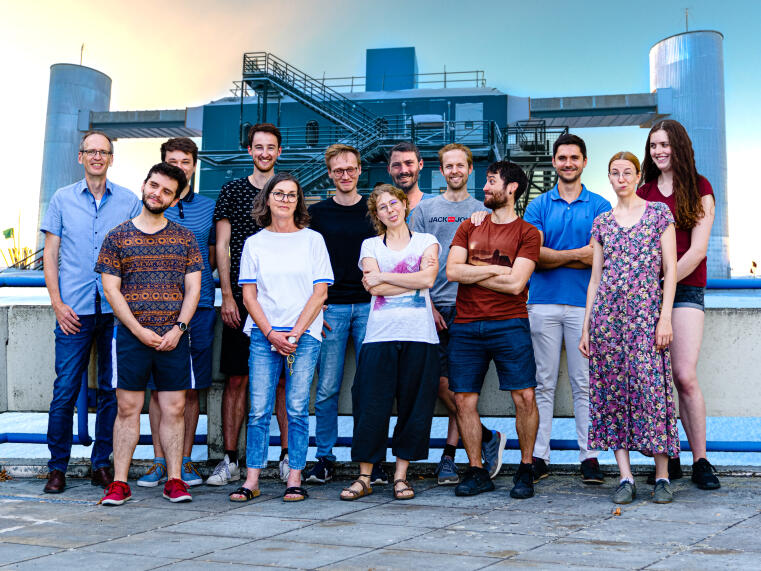
Prof. Dr. Dieter Frekers leads a research group at the Institute of Nuclear Physics, University of Münster, within the Faculty of Mathematics and Natural Sciences. His research focuses on neutrino physics, nuclear matrix elements for weak interactions, and nuclear processes in supernovae. His group actively participates in international collaborations including Eurosupernova at KVI, CHORUS at CERN, and RD46 at CERN.
- Institute of Nuclear Physics, University of Münster
- Faculty of Mathematics and Natural Sciences
- Working group leader since at least early 2000s
- Active in multiple international research collaborations
Prof. Frekers' research spans several key areas in nuclear and particle physics. His primary interests include neutrino oscillations, nuclear matrix elements for weak interactions, double beta decay, and nuclear physics processes relevant to supernovae. His group has also developed expertise in automated microscopy techniques for particle detection. The research connects fundamental nuclear physics with astrophysical phenomena, particularly in understanding stellar processes and nucleosynthesis.
The publications from Prof. Frekers' research group demonstrate a strong focus on charge-exchange reactions, neutrino physics, and detector development. The work spans nuclear structure studies, weak interaction physics, and particle detector innovation. Key themes include Gamow-Teller transitions, dipole resonances in exotic nuclei, neutrino-induced reactions, and the development of advanced detection systems like nuclear emulsion scanners and glass capillary detectors. The research connects fundamental nuclear physics with astrophysical applications, particularly in understanding stellar processes.
Prof. Frekers has supervised numerous diploma and PhD students whose work has contributed significantly to nuclear and particle physics. His students have conducted research on topics ranging from giant resonances in deformed nuclei to neutrino-induced diffractive production of D mesons. The group has maintained strong collaborations with major international facilities including CERN and the KVI accelerator in Groningen.
The research group operates within the Institute of Nuclear Physics at the University of Münster and collaborates extensively with other departments including the Institute of Radiation Biology. The group has developed specialized detector systems including focal plane polarimeters, nuclear emulsion scanning systems, and glass capillary detectors for neutrino physics experiments.

.jpeg)