معرفی
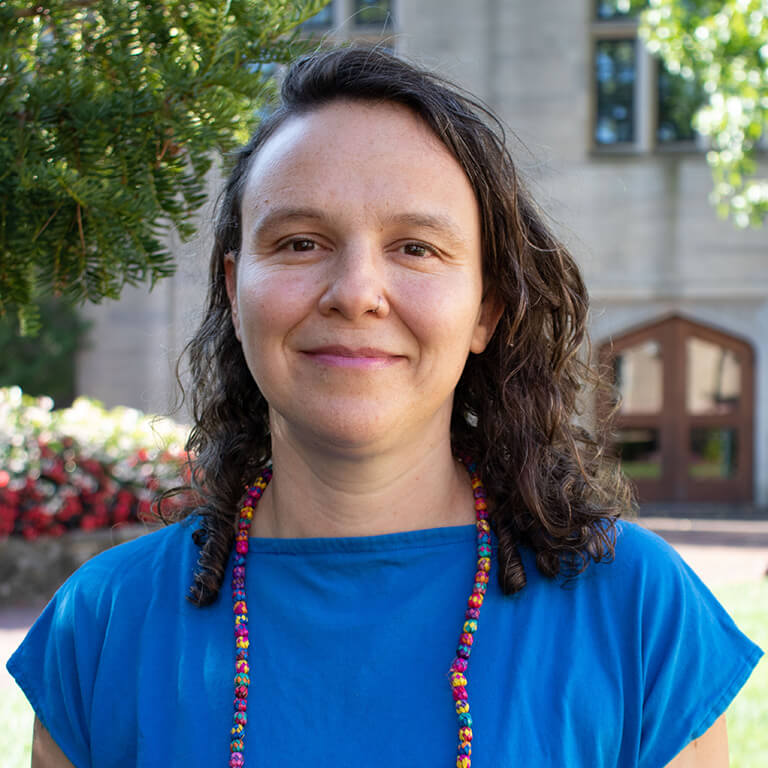
Diana Ojeda is an Associate Professor in the Department of Geography at Indiana University, conducting interdisciplinary research at the intersections of political ecology, feminist geopolitics, and Science and Technology Studies (STS). Her work critically examines dynamics of dispossession in the Colombian Caribbean, with particular attention to how militarization, "post-conflict" transitions, and crises like the COVID-19 pandemic impact vulnerable populations, especially women.
Dr. Ojeda's research program centers on feminist political ecology and critical agrarian studies, with a regional focus on Latin America and Colombia. She investigates how ostensibly progressive environmental initiatives, including ecotourism, biodiversity conservation, and "green" development projects, often serve as pretexts for land grabbing and dispossession of campesina, indigenous, and Afro-descendant communities. Her work reveals how these processes are deeply gendered, examining how women's experiences of confinement, restricted mobility, and increased care responsibilities during crises intersect with longer-term patterns of dispossession. Among her most significant contributions is the concept of "property's blind spot," which challenges conventional approaches to gender and land that focus primarily on property rights.
Her recent publications demonstrate a consistent focus on Latin American environmental politics, with particular attention to Colombia's post-conflict context following the 2016 peace agreement. Ojeda's work reveals how ostensibly progressive environmental policies frequently reinforce colonial and capitalist logics that separate society from nature and position nature primarily as a source of capital accumulation. Her research highlights the need to rethink biodiversity conservation and sustainable development outside these frameworks to genuinely support community livelihoods and peacebuilding.
Dr. Ojeda has made significant contributions to understanding the connections between gender, land, and dispossession in Latin America. Her work challenges conventional approaches that focus primarily on property rights as a solution for women's access to land, arguing instead for attention to social reproduction spaces and practices that are often excluded from property frameworks. This "blind spot of property" represents a crucial theoretical contribution to feminist political ecology.