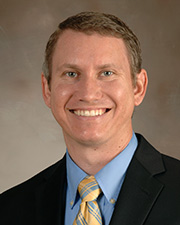
Devin W. McBride
استادیار · Neuroscience
The University of Texas Health Science Center at Houstonمعرفی
Dr. Devin W. McBride is an Assistant Professor in the Vivian L. Smith Department of Neurosurgery at The University of Texas Health Science Center at Houston (UTHealth Houston), where he joined in 2017. His appointment is within McGovern Medical School, reflecting his clinical and translational research focus in neurological disorders.
Dr. McBride earned his PhD in Bioengineering from the University of California, Riverside under the mentorship of Dr. Victor G. J. Rodgers. He completed his postdoctoral training at Loma Linda University under Dr. John H. Zhang, focusing on translational neuroscience research with emphasis on cerebrovascular disease.
His research focuses on understanding the pathophysiology of subarachnoid hemorrhage (SAH), particularly delayed cerebral ischemia (DCI), which remains a critical factor in poor patient prognosis. Dr. McBride employs live imaging techniques to study cerebrovascular dynamics following neurological injury, while also investigating thermodynamics and transport phenomena of crowded protein solutions, video bioinformatics, and medical device design with neurological applications. His interdisciplinary approach bridges engineering principles with clinical neuroscience to develop novel therapeutic strategies.
Dr. McBride's publication record demonstrates consistent contributions to the fields of cerebrovascular disease, brain injury mechanisms, and neurological device development, with numerous publications in high-impact journals such as PLOS One, Stroke, and Journal of Cerebral Blood Flow & Metabolism. His research often involves collaborative work across multiple institutions.
His scientific achievements include:
- NSF IGERT Fellowship in Video Bioinformatics
- DOE GAANN Fellowship
- NIH F32 award from NHLBI to develop and study an animal model of vasovagal syncope
Dr. McBride maintains active research in the neurosurgery department, with particular emphasis on identifying patients at high risk for developing delayed cerebral ischemia after subarachnoid hemorrhage and elucidating novel therapeutic targets. His laboratory work combines advanced imaging techniques with translational neuroscience to address critical challenges in neurological care.