معرفی
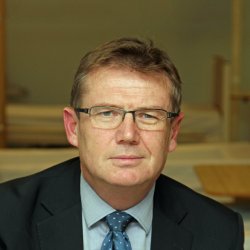
Dr. Derk-Jan Dijk is a distinguished Professor of Sleep and Physiology and Director of the Surrey Sleep Research Centre at the University of Surrey. His academic career spans over 40 years, focusing on sleep physiology, circadian rhythms, and their implications for health, particularly in dementia and aging. He holds appointments in the School of Biosciences under the Faculty of Health and Medical Sciences. Dr. Dijk’s research integrates clinical studies, neurophysiological measurements, and mathematical modeling to understand sleep regulation and its disruptions.
Research Interests: His work explores the interplay between sleep and circadian rhythms, biomarkers of sleep disruption vulnerability, and the impact of sleep disorders in dementia. He also develops technologies for non-invasive sleep monitoring. Key areas include circadian misalignment’s effects on cognition, novel biomarker identification, and translational applications of sleep science.
Key Contributions: Dr. Dijk has published over 300 peer-reviewed papers and reviews, contributing to journals like Science and Proceedings of the National Academy of Sciences. His studies on shift work’s cognitive impacts, spaceflight physiology, and REM sleep modulation via closed-loop stimulation have advanced sleep medicine. He has served as editor of SLEEP and Journal of Sleep Research, and advises pharmaceutical and tech industries.
Awards & Recognition: He is a Fellow of the Royal Society of Biology and the Academy of Medical Sciences. Honors include the Royal Society-Wolfson Research Merit Award and the Distinguished Scientist Award from the Sleep Research Society.
Grants & Partnerships: Funded by agencies like BBSRC, AFOSR (USA), and the UK Dementia Research Institute. Collaborations include Imperial College London and the Care Research & Technology Centre. His work emphasizes clinical translation, such as validating wearable devices (e.g., Dreem headband) for sleep assessment in dementia care.
Future Directions: Ongoing projects focus on circadian and sleep biomarkers in neurodegenerative diseases, longitudinal home-based sleep monitoring, and climate change’s neurological impacts. He advocates for personalized sleep interventions using AI and mathematical modeling.