معرفی
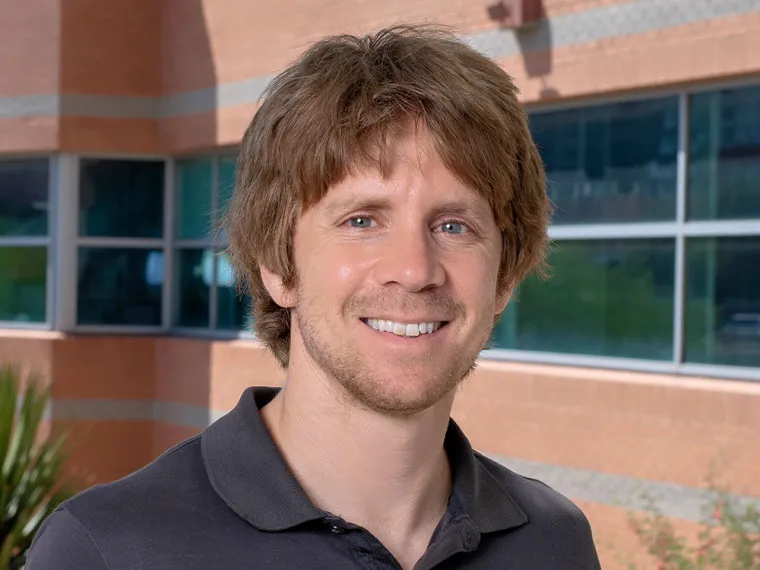
Derek Lemoine is a Professor of Economics and Director of Graduate Studies at the Department of Economics, Eller College of Management, University of Arizona. He is also a Research Associate at the National Bureau of Economic Research and an Associate Fellow at the Centre for Economic Policy Research (CEPR) in the Climate Change Research and Policy Network. He co-edits the Journal of the Association of Environmental and Resource Economists and serves as Co-Director of the Consortium for Environmentally Resilient Business, highlighting his leadership in interdisciplinary environmental research and policy engagement.
- PhD in Energy and Resources, University of California, Berkeley, 2011
Derek Lemoine's research centers on the economics of climate change, environmental and energy policy, and decision-making under uncertainty. His work spans theoretical modeling and empirical analysis, addressing topics such as optimal carbon pricing, energy transitions, climate tipping points, and the economic value of weather forecasts. He develops and applies integrated assessment models to evaluate climate policy under uncertainty, with a strong emphasis on dynamic optimization and general equilibrium effects. His research has been published in leading journals including American Economic Review, Nature Communications, and Journal of the Association of Environmental and Resource Economists.
His recent publications reveal a consistent focus on the interplay between climate uncertainty and policy design. He has shown how uncertainty increases the social cost of carbon, how financial markets value seasonal climate forecasts, and how inertia in the climate system can be leveraged to reduce policy costs. His work on dynamic subsidies for technology adoption and the welfare implications of emission intensity standards demonstrates deep engagement with practical policy instruments.
- Selected as 2022's Outstanding Publication in Journal of the Association of Environmental and Resource Economists (JAERE)
Lemoine advises graduate students and teaches courses such as Environmental and Energy Economics: Applied Theory and Energy and Environmental Challenges. He has received external funding and recognition for his work, including policy-relevant research on climate damage estimation and adaptation equity. He maintains active research collaborations with leading scholars and institutions and contributes to public discourse through media outlets such as The Conversation, LA Times, and VoxEU. His research code and teaching modules are publicly available, reflecting a commitment to open science.
He leads research projects on climate risk, energy innovation, and environmental justice, often involving interdisciplinary teams. His lab and research group focus on recursive integrated assessment modeling and the economic implications of climate tipping points. Future work includes refining estimates of climate damages, analyzing the distributional impacts of infrastructure policy, and improving the design of carbon markets under uncertainty.