معرفی
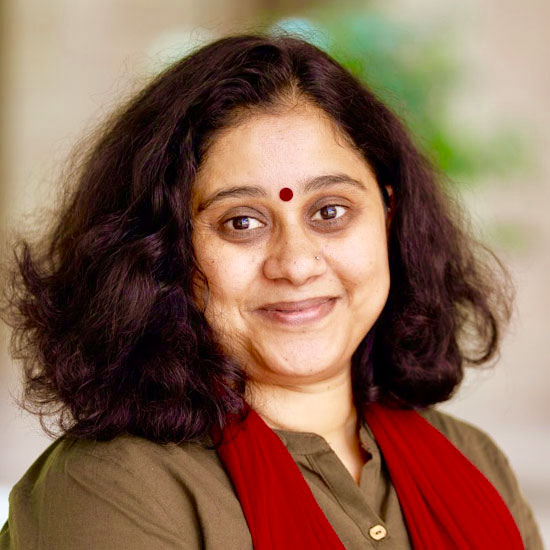
Deepa Nair serves as an Assistant Teaching Professor in the Department of History at Carnegie Mellon University's Dietrich College of Humanities and Social Sciences, based at CMU Qatar since 2019. A historian of Modern South Asia, her work critically examines the intersections of politics, religion, and identity formation within India's secular framework, with particular emphasis on ethno-religious nationalism's impact on minorities and educational systems.
Education:
- Ph.D. in History, National University of Singapore (2007)
Dr. Nair's research program investigates how historical narratives are constructed in educational materials and national discourse, revealing tensions between secular nation-building and religious majoritarianism. Her scholarship spans identity politics, gender dynamics in contemporary South Asia, diaspora studies, and transnational historiography, consistently highlighting marginalized perspectives within dominant historical frameworks. This work directly informs her teaching approach across diverse undergraduate courses.
Publication analysis reveals a sustained two-decade focus on textbook politics and nationalist ideology, with recent scholarship (2021-2023) intensifying examination of Hindu nationalism's institutionalization in education and media representation. Earlier works established foundational critiques of communal politics in historical interpretation, demonstrating methodological consistency in analyzing state-society-religion interactions across South Asia.
Scientific Awards:
- Provost's Inclusive Teaching Fellowship (2021-22) recognizing innovative pedagogical approaches to diversity and inclusion
Dr. Nair's academic leadership extends through curriculum development for courses addressing urgent contemporary issues including pandemic impacts on social inequity, Muslim representation in media, and postcolonial nationalism. Her forthcoming anthology and monograph represent significant contributions to decolonizing South Asian historical narratives while connecting historical processes to current sociopolitical challenges.