معرفی
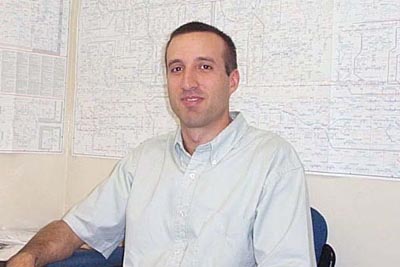
David Szlag serves as an Associate Professor in the Department of Chemistry at Oakland University's College of Arts and Sciences. His academic office is situated in Room 207 of the Mathematics and Science Center in Rochester, Michigan, and he is accessible via email at szlag@oakland.edu and phone at (248) 370-2321. Dr. Szlag's work bridges environmental science with critical societal issues including social justice, human health, economics, and energy sustainability.
His research program focuses on environmental health, water resources management, hydrologic modeling, sediment transport, and emerging contaminants within aquatic microbiology. A major thrust applies quantitative polymerase chain reaction (qPCR) technology to analyze harmful algal bloom (HAB) dynamics, beach bacterial contamination, and invasive species detection. This innovative approach reduces research costs while accelerating water quality assessment, exemplified by his collaboration with the Huron Clinton Metropolitan Park Authority (HCMA) to develop rapid recreational water testing protocols.
Analysis of Dr. Szlag's publication history reveals a consistent trajectory in water quality science, with increasing emphasis on cyanotoxins, HAB monitoring, and real-time detection technologies. His work spans practical applications for water utilities to fundamental studies of sediment-transport interactions in aquatic ecosystems, demonstrating interdisciplinary integration of environmental engineering, molecular biology, and policy frameworks.
Dr. Szlag mentors students within his research group on environmental monitoring projects and maintains an active partnership with HCMA to implement qPCR-based water safety systems. This collaboration represents a significant applied research initiative addressing public health protection through technological innovation in recreational water management.
The Szlag research laboratory operates at the forefront of environmental molecular analysis, specializing in qPCR applications for rapid pathogen and toxin detection. Current efforts with HCMA focus on establishing field-deployable testing protocols to enhance beach safety monitoring across metropolitan park systems through cost-effective, high-precision methodologies.