معرفی
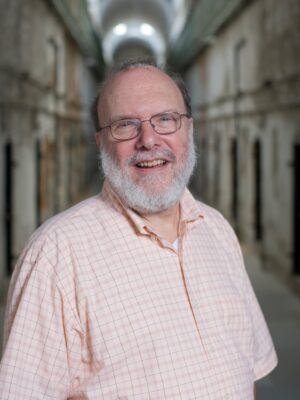
David Rudovsky is a Senior Fellow at the University of Pennsylvania Carey Law School and a leading civil rights and criminal defense attorney. He has been affiliated with Penn Carey Law since 1988, where he teaches Criminal Law, Constitutional Criminal Procedure, and Evidence. He practices public interest law at Kairys, Rudovsky, Messing, Feinberg & Lin, LLP, and is a co-author of influential legal treatises including Police Misconduct: Law and Litigation and The Law of Arrest, Search, and Seizure in Pennsylvania.
His research centers on civil rights, criminal justice reform, police accountability, and constitutional law—particularly the Fourth and Sixth Amendments. He critically examines the use of empirical data in legal reasoning, challenges racial profiling and stop-and-frisk practices, and advocates for effective assistance of counsel. His work blends doctrinal analysis with real-world litigation insights.
The recent articles in his portfolio reflect a consistent focus on constitutional policing, empirical scrutiny of judicial assumptions, and systemic reform. Trends include the use of data to challenge 'common sense' justifications for police stops, the gap between constitutional rhetoric and actual legal representation, and structural flaws in disciplinary systems for law enforcement.
- MacArthur Foundation Fellowship
- ACLU Civil Liberties Award
- Harvey Levin Award for Excellence in Teaching (five times)
- University of Pennsylvania Lindback Award for Teaching Excellence (1996)
David Rudovsky has made significant contributions to legal education and public interest advocacy. He has not advised any named students in the provided texts, but his teaching excellence is widely recognized. He has not received specific grant mentions, but his sustained scholarship and public engagement suggest ongoing institutional and professional support. He is actively involved in legal commentary, frequently discussing contemporary issues such as police arbitration, DOJ policy shifts, and court vacancies.
He is associated with the University of Pennsylvania Carey Law School and contributes to its public law and legal theory research initiatives. He collaborates with scholars and practitioners on criminal justice reform and is cited in empirical legal studies. His work is disseminated through SSRN and major law journals, reinforcing his role in shaping national discourse on civil liberties and policing.