معرفی
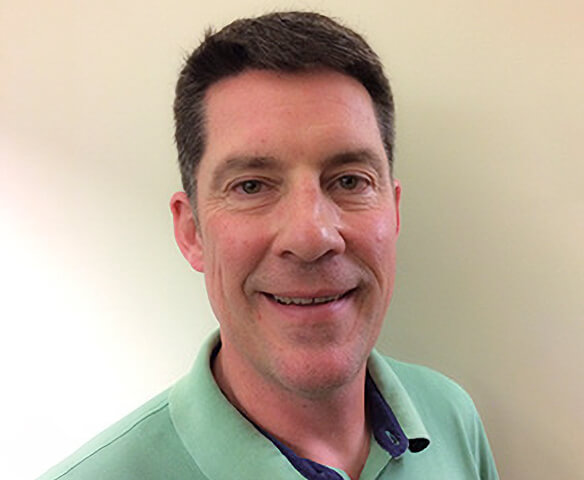
David Poister is a Professor of Chemistry and Environmental Science at St. Norbert College, where he has taught since 1995 within the Chemistry Department. His academic career spans over 25 years with a focus on interdisciplinary environmental research and undergraduate education.
His educational background includes:
- B.S. in Chemistry from St. Francis College
- M.S. in Water Chemistry from the University of Wisconsin-Madison
- Ph.D. in Water Chemistry from the University of Wisconsin-Madison
Professor Poister's research centers on biogeochemistry and chemical ecology of aquatic systems, with specific expertise in algal interactions and pigment formation in senescent leaves. His work bridges empirical environmental science with philosophical inquiry into the science-religion dialogue, examining how this intersection can advance human understanding. This dual focus creates a unique research profile spanning hard science and humanities.
Analysis of his 30-year publication record reveals two distinct research trajectories: early work (1992-2005) concentrated on nutrient cycling and diatom dynamics in north temperate lakes, while later publications (2015-2022) increasingly incorporate interdisciplinary perspectives, culminating in his 2022 Zygon article on human evolution and Christian ethics. The shift demonstrates expanding intellectual scope from aquatic biogeochemistry to broader societal implications.
Scientific Awards:
- No major scientific awards were documented in the provided materials
Professor Poister has mentored nine documented students across multiple publications, with asterisked co-authors indicating advisee contributions to research on diatom ecology and sedimentation processes. His collaborative network includes long-term partnerships with D.E. Armstrong and J.P. Hurley from the University of Wisconsin-Madison, suggesting sustained research funding though specific grants aren't detailed. Course instruction spans foundational chemistry (CHEM 105/107) to specialized environmental topics (ENVS 300/310).
While no dedicated laboratory name is specified, his research methodology combines field studies in temperate lake systems with laboratory experiments, likely utilizing St. Norbert College's chemistry facilities and collaborating with Wisconsin-Madison's aquatic research infrastructure. Current work continues to explore algal chemical interactions while expanding the science-religion discourse.