معرفی
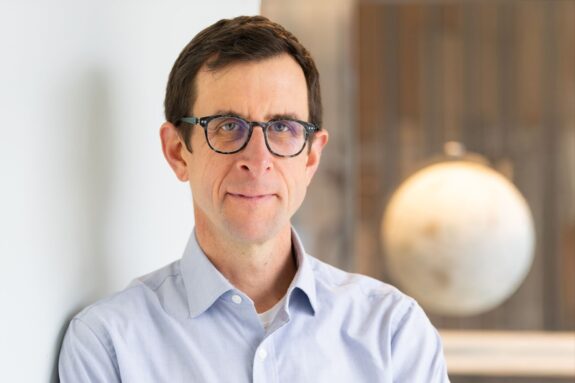
David McGee is the William R. Kenan, Jr. Professor of Earth and Planetary Sciences at Massachusetts Institute of Technology, where he serves as Department Head and Director of the Terrascope First-Year Learning Community. A MacVicar Faculty Fellow, he combines research on Earth's climate history with significant contributions to undergraduate education.
- Carleton College - BA in Geology
- Chatham College - MA in Teaching/Environmental Education
- Tulane University - MS in Earth and Environmental Sciences
- Columbia University - PhD (2009)
His research focuses on isotope geochemistry and geochronology to reconstruct Earth's climate history. Key projects include:
- Tropical Rainbelt Dynamics - Using stalagmites and lake sediments to track historical shifts in the Intertropical Convergence Zone across Southeast Asia, Madagascar, and Mexico
- Dust Transport Analysis - Reconstructing wind patterns through deep-sea sediment studies in North Africa, East Asia, and the Atacama Desert
- Permafrost Stability - Investigating carbon release mechanisms using Canadian cave deposits from past warm intervals
- Dryland Water Availability - Correlating hydrological changes with climate models in the American West and northern Chile
Recent publications demonstrate methodological innovations in triple oxygen isotope frameworks, machine learning analysis of carbonate textures, and Brillouin thermometry for paleotemperature reconstruction. His work bridges field observations with climate modeling to improve future projections.
Scientific recognition includes:
- 2024 MIT School of Science Teaching Prize
- 2022 MacVicar Faculty Fellow
- 2018 Excellence in Mentoring Award
- 2009 NOAA Climate and Global Change Fellowship
As an active advisor and program director, he mentors graduate researchers while leading institutional climate initiatives through committees like the Climate Nucleus Education Working Group and Climate Action Through Education Review Committee. His laboratory (4-441) and administrative office (55-101) coordinate fieldwork, geochemical analyses, and climate model comparisons.