معرفی
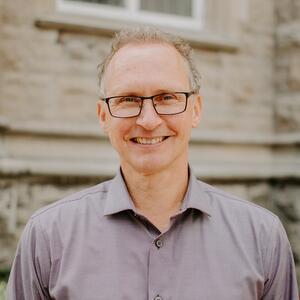
Dr. David Hancock is an Associate Professor at Memorial University of Newfoundland's School of Human Kinetics and Recreation. He holds a PhD in Human Kinetics from the University of Ottawa, with prior roles as a Post-Doctoral Fellow at Queen’s University and Assistant Professor at Indiana University. His research focuses on sport officiating psychology—including group dynamics, mental health, and decision-making—and youth sport structures like relative age and birthplace effects. He leads the SPORT laboratory, offering research opportunities in these areas.
Education Background:
- B.A. Sport Psychology, Laurentian University
- M.A. Human Development, Laurentian University
- PhD Human Kinetics, University of Ottawa
- Post-Doctoral Fellowship, Queen’s University
Research Interests:
Dr. Hancock’s work emphasizes understanding the psychological and social dynamics of sport officials, including mental health challenges, decision-making processes, and group cohesion. He also investigates structural inequities in youth sports, such as relative age effects (RAGE) and birthplace advantages, advocating for evidence-based policies to ensure equitable participation. His lab integrates theoretical frameworks with practical applications, such as using 360-degree video training to enhance officiating skills.
Teaching and Outreach:
Dr. Hancock teaches courses in coaching, sport sociology, and psychology. As Memorial University’s Mental Performance Consultant, he supports athletes’ psychological well-being. His work bridges academic research with real-world sport governance, emphasizing the need for systemic reforms to protect officials and youth athletes.
Advising and Labs:
He supervises the SPORT lab, focusing on sport officiating and youth sport structures. Prospective students must align with his research areas, with preference given to those studying officiating dynamics. Though no specific grants are highlighted, his projects reflect sustained engagement with sport policy and practitioner training.
Labs/Teams:
The SPORT lab serves as a hub for collaborative research, hosting undergraduate and graduate students interested in sport psychology, officiating, and youth development. Partnerships with sport organizations inform his work on practical interventions.