معرفی
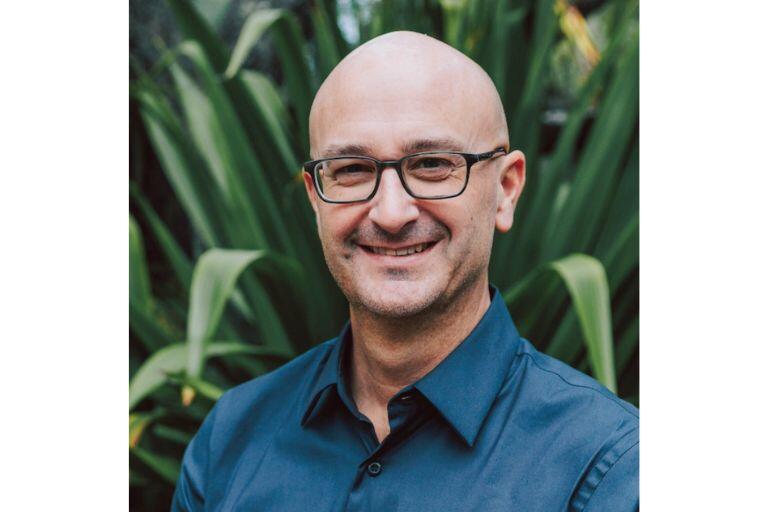
Associate Professor David Flannery is part of the Faculty of Science at Queensland University of Technology (QUT), leading the School of Earth & Atmospheric Sciences. He specializes in astrobiology, geology, and sustainable development, with a focus on planetary science and Mars exploration. David joined QUT in 2019 to advance space science capabilities and has contributed extensively to NASA’s Mars missions, including co-investigator roles on the Perseverance Rover’s PIXL instrument. His research bridges terrestrial and extraterrestrial environments, emphasizing ancient microbial metabolisms, astrobiological potential, and planetary instrumentation.
David holds a PhD in Geology from the University of New South Wales (2014) and has held postdoctoral and research roles at NASA’s Jet Propulsion Laboratory. His work integrates field studies, geochemical analysis, and advanced instrumentation to explore early Earth and Mars environments. Notable achievements include developing hardware/software for NASA, such as the PIXL instrument, and identifying potential biosignatures on Mars.
Research Interests: Astrobiology, Precambrian geology, planetary mineralogy, Mars habitability, and sustainable exploration technologies. His work spans Archean stromatolites to Martian sulfates, emphasizing interdisciplinary approaches to understanding life’s origins and extraterrestrial environments.
Awards: 2021 AIPS Young Tall Poppy Award, 2020 ARC DECRA Fellow, 2017 Voyager Prize. These accolades recognize his contributions to planetary science and public engagement.
Supervision & Grants: David supervises PhD and MPhil students in astrobiology and planetary geology, with a focus on PIXL data analysis and Mars sample return strategies. He leads multi-million-dollar NASA-funded projects and collaborates globally on Mars mission science.
Labs/Teams: Part of the NASA Mars 2020 Science Team and the Planetary Instrument for X-ray Lithochemistry (PIXL) development group. His lab integrates fieldwork, spectroscopy, and computational tools to advance planetary exploration.