معرفی
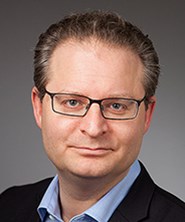
David Ekholm is an Assistant Professor in Social Work at Linköping University's Department of Culture and Society, affiliated with both the Department of Social Work and the Center for Municipal Strategic Studies (CKS). His research focuses on social policy conditions for welfare governance, particularly examining how inequality, segregation, and power relations shape municipal welfare interventions.
His educational background includes a Master of Philosophy in Sociology (2006), Bachelor of Philosophy in Pedagogy (2009), and PhD in Social Work (2016). Ekholm's research sits at the intersection of political sociology and social work, analyzing how welfare efforts function as political governance practices.
Ekholm's research interests span the political sociology of social work, municipal governance of welfare, and the use of sport as a social policy tool. His work critically examines how welfare interventions address inequality through pedagogical rationalities, particularly focusing on children and youth defined as marginalized. He investigates the complex interplay between formal policy areas (social, cultural, educational) in municipal welfare provision and the evolving role of civil society in welfare governance.
His recent publications show a consistent focus on sport as a governance mechanism for addressing social problems, with particular attention to gender, inequality, and municipal policy implementation. The research demonstrates how sport-based interventions operate within broader frameworks of social control and inclusion, revealing tensions between municipal ambitions and practical implementation.
As a supervisor for bachelor's and master's theses in social work, Ekholm contributes to educating future welfare professionals. His work at CKS involves collaborating with municipalities to strengthen research on welfare in broader contexts, examining how policy areas like culture, leisure, and education intersect within social welfare provision.
Ekholm leads research projects examining sport as a response to inequality, municipal public health policy tensions, and local cultural governance. His work demonstrates how welfare efforts are organized politically and administratively by public actors, particularly municipalities, while navigating complex relationships between state ambitions and local self-governance.