معرفی
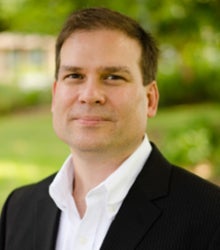
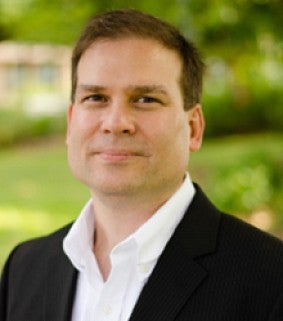
David DeGarmo is a Research Professor at the University of Oregon's College of Education, affiliated with both the UO Prevention Science Institute and the Department of Counseling Psychology and Human Services. He serves as a prevention science methodologist with expertise in intervention design and evaluation, structural equation modeling, and multilevel modeling.
Dr. DeGarmo earned his Ph.D. in Sociology from the University of Akron in 1993, with a specialization in methodology and family sociology. His research career has focused on family stress models and preventive interventions for families at-risk for compromised parenting, with particular emphasis on fathering processes. He is a former director of the Center for Assessment, Statistics and Evaluation (CASE) at the University of Oregon and has coauthored more than 40 efficacy and effectiveness evaluations.
His current research portfolio includes leadership roles on several major NIH-funded projects: as MPI of the NICHD project 'Investigating the impacts of COVID-19 school closures on long-term adjustment in youth with or at risk for disability,' MPI of the RADx-UP 'Optimizing SARS-CoV-2 Testing and Promotores Interventions to Serve Latinx Communities,' and PI of the UO Data Science Core for the Center on Parents and Opioids. His work has demonstrated significant real-world impact, including a program that tripled COVID-19 testing turnout in Latinx communities across Oregon.
- Outstanding Accomplishment NTTF Research Award (2021)
- Family Risk and Resilience Postdoctoral Fellowship (1993-1996)
- Graduate Student of the Year (1993)
- Rogler Merit Assistantship (1992-1993)
Dr. DeGarmo maintains an active commitment to diversity, equity, and inclusion, particularly through his work with underrepresented communities. As a first-generation college graduate, he takes pride in mentoring doctoral students and has formal and informal mentoring relationships. He is particularly proud of his work with the OSJP staff (Oregon Saludable Juntos Podemos) and the collaborative statewide research conducted during the SARS-CoV-2 pandemic. His methodological expertise spans structural equation modeling, multilevel modeling, and intervention design, which he applies to address critical issues in family functioning and child development.