معرفی
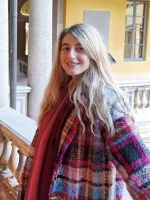
Daniele Pala is an Adjunct Professor at the University of Pavia's Faculty of Medicine and Surgery, where he teaches 'Principles of Informatics.' He concurrently serves as a Postdoctoral Researcher at the University of Pennsylvania's Perelman School of Medicine, focusing on machine learning approaches for Alzheimer's disease prediction. His academic journey includes a PhD in Bioengineering and Bioinformatics from the University of Pavia (2017-2020), with a dissertation on spatial enablement tools for urban public health. Pala's research spans environmental epidemiology, geospatial analytics, agent-based modeling, and machine learning applications in healthcare, supported by EU projects like BRAINTEASER and PERISCOPE. His work integrates multi-source data (e.g., GWAS, imaging, environmental sensors) to address public health challenges like MS progression and urban health disparities.
Education:
- PhD in Bioengineering and Bioinformatics, University of Pavia (2020)
- Master's in Bioengineering, University of Pavia (2017)
- Bachelor's in Bioengineering, University of Pavia (2015)
Research focuses on leveraging machine learning and geospatial techniques to study disease-environment interactions. Key areas include:
- AI-driven Alzheimer's progression modeling
- Environmental exposure analysis for MS and asthma
- Urban health metrics via GIS and agent-based simulations
- Covid-19 data visualization tools (PERISCOPE Atlas)
His publications emphasize cross-disciplinary approaches, with recent work on phenotypic age modeling, ALS progression prediction, and the impact of containment policies on pandemic dynamics. Pala has advised four undergraduate theses and contributed to conference organization (e.g., BIBM 2022 session chair). His lab affiliations include the Shen Lab (UPenn) and the Biomedical Informatics Lab (Pavia).