معرفی
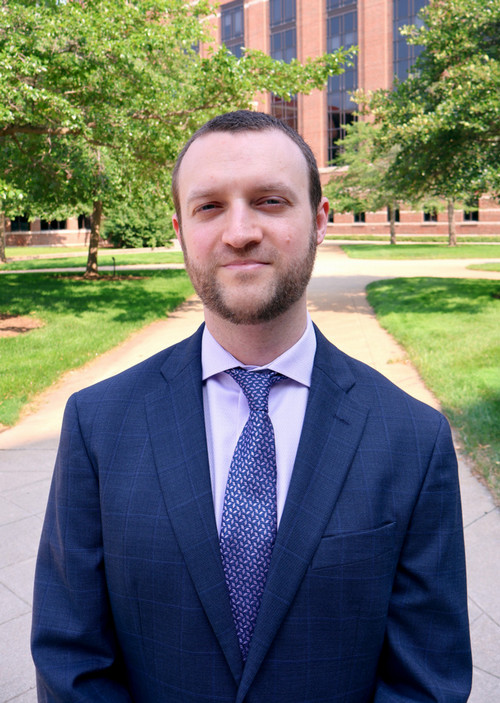
Daniel S. Schiff serves as an Assistant Professor of Technology Policy in the Department of Political Science at Purdue University and co-directs GRAIL (Governance and Responsible AI Lab). His interdisciplinary work bridges political science, technology policy, and ethics with a focus on real-world applications in AI governance.
Dr. Schiff earned his Philosophy degree from Princeton University with a focus on robotics and intelligent systems, followed by a Master's in Social Policy from the University of Pennsylvania and a PhD in Public Policy from the Georgia Institute of Technology.
His research centers on the formal and informal governance of AI through policy and industry, examining AI's social and ethical implications across multiple domains including education, manufacturing, finance, and criminal justice. Schiff's interdisciplinary approach addresses industry standards for AI ethics, public opinion dynamics in policy processes, development of social responsibility among computing professionals, and public engagement in emerging technology governance. At GRAIL, he fosters interdisciplinary collaborations using diverse theoretical approaches to study AI's societal impacts.
His work has been published across numerous disciplines including Policy Studies Journal, Science and Public Policy, Public Administration, Technology in Society, AI & Society, IEEE Transactions on Technology & Society, and the Journal of Engineering Education.
- Secretary of IEEE 7010-2020 standard (first AI ethics industry standard)
Dr. Schiff maintains strong connections between academia and industry, having served as the founding Responsible AI Lead at JP Morgan Chase & Co. (the world's largest bank by Forbes 2000) and remaining engaged in international, national, and subnational AI policy efforts. Prior to his academic career, he worked in the non-profit K-12 education sector as Director of Research, Evaluation, and Planning at the Philadelphia Education Fund.
As co-director of GRAIL, he leads interdisciplinary research collaborations studying AI's social, policy, and ethical implications while working with graduate and undergraduate students. He also contributes to Purdue's broader AI initiatives as part of the Steering Committee for Purdue's Institute for Physical AI and develops interdisciplinary coursework focused on technology, policy, and ethics.