معرفی
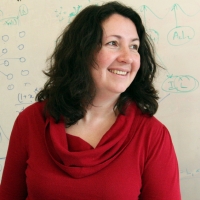
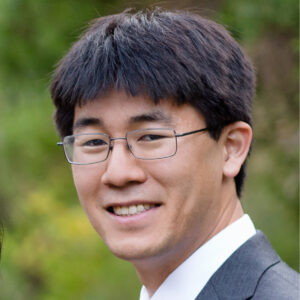
Daniel Moyer is an Assistant Professor of Computer Science at Vanderbilt University's School of Engineering, where he leads the Moyer Lab focused on bridging machine learning and medical imaging to improve patient outcomes and scientific discovery. He is also affiliated with the Vanderbilt Institute for Surgery and Engineering (VISE), an interdisciplinary entity bringing engineers and physicians together to impact healthcare.
His educational background includes a Ph.D. in Computer Science from the University of Southern California (2019) and a B.S. in Mathematics of Computation from the University of California, Los Angeles. Prior to joining Vanderbilt, he was a Post-Doc at MIT CSAIL working with Polina Golland.
Professor Moyer's research focuses on applying machine learning techniques to medical imaging challenges. His work spans several key areas including tracking and reconstruction projects in fetal MRI, solving multi-site problems in medical image analysis (harmonization), and segmentation problems in intra-vascular ultrasound (IVUS). His lab works directly with clinicians and researchers to translate advances in computer vision to better patient outcomes. While primarily working with MRI and CT imaging, his research group is open to exploring new imaging domains.
His publications demonstrate a strong focus on invariant representations for medical imaging, 3D imaging tracking, and cortical connectivity modeling. His work has been presented at top conferences including MICCAI and NeurIPS, with a particular emphasis on practical applications of machine learning in medical contexts.
- MICCAI Young Scientist Award (2016)
Professor Moyer actively collaborates with clinicians and researchers across institutions. His lab welcomes new potential collaborators interested in exploring what might be possible at the intersection of machine learning and medical imaging. He has presented at various seminars and workshops, including speaking at Stanford and the Dipy workshop.
The Moyer Lab maintains an active research agenda, with recent work focusing on fetal MRI automation, diffusion MRI harmonization, and developing invariant representations without adversarial training. The lab appears to have connections with Boston Children's Hospital, Harvard Medical School, and MIT, particularly in fetal imaging research.