معرفی
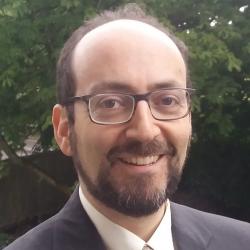
Dr. Daniel H. Weiss serves as the Polonsky-Coexist Senior Lecturer in Jewish Studies at the Faculty of Divinity, University of Cambridge. He is actively involved in the Cambridge Interfaith Programme, contributing to scholarly dialogue across religious traditions.
Dr. Weiss received his M.T.S. from Harvard Divinity School and earned his Ph.D. from the University of Virginia's Department of Religious Studies. His academic journey reflects deep engagement with both Jewish philosophical traditions and broader theological discourse.
His research expertise spans Jewish philosophy, particularly Hermann Cohen studies, Lurianic Kabbalah in modern contexts, and the complex relationship between scripture and violence. Dr. Weiss examines how religious texts address ethical dilemmas and political questions in contemporary society, with special focus on divine violence in Jewish thought and the indirect communication of religious meaning. His work bridges historical scholarship with urgent modern concerns about religious identity and interfaith understanding.
Dr. Weiss's publications reveal consistent thematic development around the intersection of Jewish philosophy with broader theological and ethical questions. His recent work explores how biblical dietary laws reflect ideals of non-violence in the natural world, connecting ancient religious texts with modern ethical concerns about violence and coexistence.
- Humboldt Research Fellowship for Experienced Researchers
As a scholar deeply engaged with both academic and religious communities, Dr. Weiss contributes to interfaith dialogue through his work with the Cambridge Interfaith Programme. His research has been recognized with prestigious fellowships including the Humboldt Research Fellowship for Experienced Researchers, supporting his continued exploration of Jewish philosophical traditions in contemporary contexts.
Dr. Weiss participates actively in the Cambridge Interfaith Programme, which fosters research, education, and dialogue on religious diversity and interreligious relations, positioning him at the forefront of contemporary scholarly engagement with religious pluralism.