معرفی
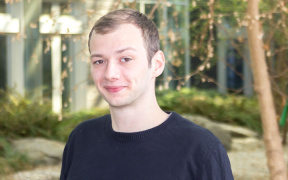
Dr. Daniel Beßler is a Researcher at the University of Bremen specializing in knowledge representation and cognitive robotics. Affiliated with the Institute for Artificial Intelligence, he contributes to the Collaborative Research Center EASE (Extracting and Applying Structure from Everyday Activities) and develops frameworks bridging theoretical AI with practical robotic applications.
His educational background includes a PhD in Computer Science from the University of Bremen (2022), with dissertation research on ontological representation of activity context for flexible robot task execution. This foundational work underpins his contributions to semantic reasoning in dynamic environments.
Beßler's research centers on hybrid symbolic-subsymbolic reasoning systems, with leadership in developing KnowRob 2.0 – a knowledge processing framework enabling cognition-enabled robotic agents. His work extends to semantic scene representation, activity recognition in virtual reality, and game technology applications for robotics simulation. Key innovations include the SOMA ontology for socio-physical activity modeling and FailRecOnt for failure recovery in robotic planning.
Recent publications (2021-2024) reveal strong trends in ontological modeling for robot introspection, user preference representation, and universal scene description translation. His work consistently addresses challenges in activity parsing, metacognition, and knowledge-driven manipulation in cluttered environments.
Notable scientific recognitions include:
- Finalist for Best Robotics Paper Award at AAMAS 2018
- Selection as one of the most important publications by IEEE Technical Committee on Cognitive Robotics
Beßler has over four years of teaching experience in AI and robotics courses, and six years supervising student projects including RoboCup@Home competitions and Unreal Engine-based human modeling. He has secured research funding through CRC EASE and international collaborations focused on knowledge-driven robotics.
As co-author of IEEE 1872.2 standard ontology and lead developer of openEASE cloud platform, he actively shapes robotics standardization while maintaining lab affiliations with CRC EASE and virtual reality research groups exploring GPU programming for interactive AI applications.