معرفی
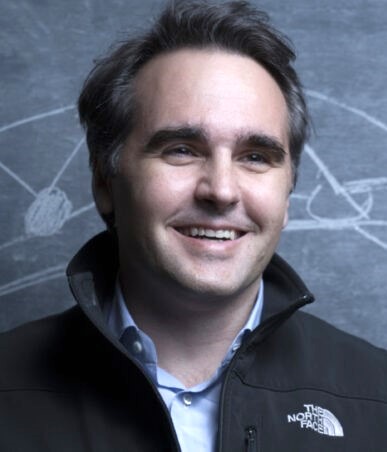
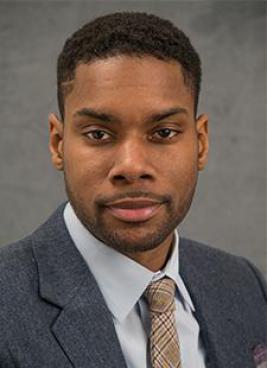
Damon J. Phillips is the Robert Steinberg Professor of Management at the Wharton School, University of Pennsylvania, with prior appointments as Lambert Family Professor of Social Enterprise at Columbia University Business School and faculty at Chicago Booth (1998-2011). His expertise spans entrepreneurship, social networks, labor markets, and organizational change, focusing on professional services markets and cultural industries like jazz.
His educational background includes:
- PhD in Sociology from Stanford University
- Master's in Sociology from Stanford University
- Master's in Aeronautics and Astronautics from MIT
- Bachelor's in Physics from Morehouse College (Phi Beta Kappa)
Phillips' research examines how social structures shape market outcomes, investigating identity formation in labor markets, network effects in cultural production, and strategic responses to institutional constraints. His work bridges sociology and management, analyzing professional service firms, jazz evolution, and entrepreneurial pathways for marginalized groups like formerly incarcerated individuals.
His publications reveal consistent focus on structural influences in markets, from jazz canon formation to MBA career specialization. These studies employ historical analysis, network theory, and field experiments across management, sociology, and psychology domains, demonstrating how organizational decisions interact with shifting cultural tastes and market identities.
His scientific recognition includes:
- Distinguished Educator Award, Academy of Management OMT Division (2021)
- Fellow, Center for Advanced Study in the Behavioral Sciences at Stanford (2010-2011)
- Election to ASA Economic Sociology Executive Council (2008-2011)
- Academy of Management OMT Division Representative-at-Large (2008-2011)
As Associate Editor of Administrative Science Quarterly and former editorial roles at Management Science and American Journal of Sociology, Phillips guides scholarly discourse while mentoring doctoral students in management and sociology. His teaching in organizational change integrates academic theory with practitioner insights through cases and simulations, emphasizing leadership skills for navigating complex transformations. Media outlets including The New York Times and Knowledge at Wharton regularly feature his research on entrepreneurship and social enterprise.
Though no dedicated lab is specified, his interdisciplinary collaborations span management, sociology, and psychology, particularly evident in mindset studies examining how psychosocial contexts alter physiological responses and performance outcomes.