معرفی
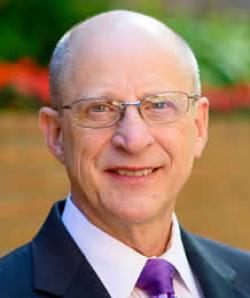
Dale A. Nance is the Albert J. Weatherhead III and Richard W. Weatherhead Professor of Law at Case Western Reserve University School of Law, where he has served since 2002. An internationally recognized scholar in evidence law, he previously held academic positions at Chicago-Kent College of Law, Cornell University, University of Colorado, and University of San Diego. His distinguished career includes authorship of influential monographs and textbooks that shape contemporary legal education and practice.
Education
- Juris Doctor, Stanford University (1977)
- Master of Arts, University of California, Berkeley (1981)
- Bachelor of Arts, Rice University (1974)
Research Focus
Nance's scholarship centers on evidence theory with particular emphasis on burdens of proof, Keynesian weight, and the epistemological foundations of adjudication. His work critically examines procedural-substantive law intersections, conflict of laws, jurisprudential frameworks, and evidentiary standards in archaeological contexts. This research advances theoretical understanding of judicial decision-making while addressing practical courtroom applications.
Publication Analysis
Nance's recent scholarship demonstrates consistent focus on evidentiary theory development, particularly through mathematical modeling of proof standards and epistemological analysis of judicial reasoning. His work frequently addresses doctrinal tensions in conflicts of law and evidence tampering jurisprudence. Significant contributions include theoretical refinements to burdens of proof frameworks and critical analyses of Supreme Court evidence jurisprudence. Recent publications show increased engagement with international evidence theory harmonization.
Awards and Recognition
No awards are documented in the available sources.
Academic Leadership
The available materials do not reference specific student advising, research grants, or laboratory direction. Nance's academic influence manifests primarily through seminal publications that have shaped evidence law discourse internationally. His textbooks remain foundational in legal education curricula concerning evidence and justice systems.