معرفی
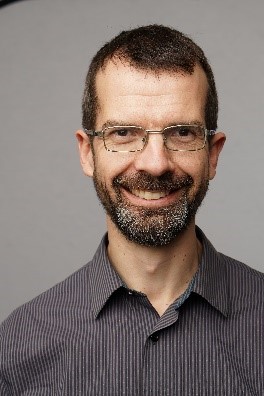
Cyril Isnart is a Senior Researcher at the CNRS and a member of the IDEMEC laboratory (CNRS-Aix Marseille Université, France), with research collaborations at CRIA and CIDEHUS in Portugal. He is an anthropologist specializing in religion, music, and heritage-making in Southern Europe, particularly in France, Portugal, and Greece. His work bridges ethnographic fieldwork with critical heritage studies, focusing on the social and religious dimensions of cultural preservation.
His research interests include the anthropology of religion, cultural heritage, religious festivals, confessional coexistence, and the transformation of sacred spaces. He has led the international research program Religious Memories and Heritage Practices in the Mediterranean (2013–2015), funded by Portugal’s FCT, and co-founded the Respatrimoni network in 2009 to foster interdisciplinary dialogue on heritagization processes.
His recent publications and conference contributions explore the interplay between religious values and heritage practices, particularly in Catholic contexts of the Iberian Peninsula and border regions of France and Italy. He has published extensively in journals such as the International Journal of Heritage Studies, Journal of Mediterranean Studies, and ethnographiques.org, and has co-edited special issues on heritage, tourism, and cultural change. His work demonstrates a consistent focus on the ambiguities and tensions in heritage-making, especially in municipal museums and guided tours around Portuguese sanctuaries.
- Senior Researcher, CNRS
- Member, IDEMEC (CNRS-Aix Marseille Université)
- Research Collaborator, CRIA and CIDEHUS (Portugal)
- Co-founder, Respatrimoni Research Network (2009)
- Principal Investigator, FCT-funded Program on Religious Heritage (2013–2015)
Cyril Isnart has taught cultural anthropology at the universities of Provence, Nice-Sophia Antipolis, Paris V-René Descartes, and Évora (Portugal). He has not received any explicitly mentioned scientific awards in the provided texts but maintains an active role in academic publishing and international research collaboration. He is involved in critical heritage studies and participates in forums discussing the epistemology and future of the field.
He is associated with no specific lab or team beyond IDEMEC, but his collaborative networks in Portugal and across the Mediterranean reflect a strong commitment to transnational research on heritage and religion.