
معرفی
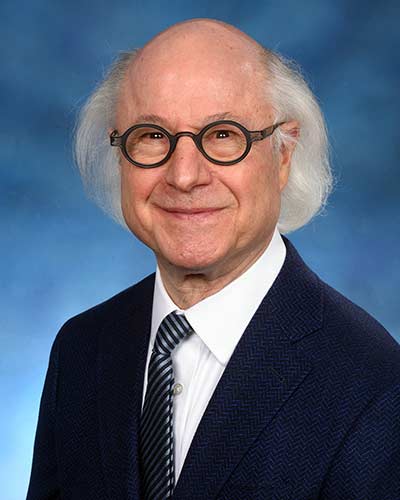
Curt I. Civin, MD, is the Philip A. Zaffere Distinguished Professor of Regenerative Medicine and Professor of Pediatrics at the University of Maryland School of Medicine. He serves as Director of the Center for Stem Cell Biology & Regenerative Medicine and Associate Dean for Research. His groundbreaking discovery of the CD34 stem cell marker revolutionized hematopoietic stem cell transplantation and leukemia diagnostics.
Education
- BA in Biology/Independent Study, Amherst College (1970, magna cum laude)
- MD, Harvard Medical School (1974, cum laude)
- Pediatrics Residency, Boston Children’s Hospital (1974-1976)
- Fellowships in Pediatric Hematology-Oncology & Tumor-Immunology, NCI/NIH (1976-1979)
Research Focus
Dr. Civin's research spans stem cell biology, leukemia pathogenesis, and regenerative medicine. He pioneered CD34-based stem cell isolation and investigates microRNA regulation in hematopoiesis. His lab develops novel therapies like artemisinin derivatives for leukemia and microfluidic technologies for cell processing.
Current work includes targeting leukemic stem cells via BCL-2/kinase inhibitor combinations and engineering deterministic lateral displacement (DLD) devices for CAR-T cell manufacturing.
Publication Trends
His recent articles focus on translational applications: optimizing artemisinin-based antileukemic compounds (2021-2023), cardiac progenitor cell mechanisms (2020-2022), and microfluidic innovations for cell therapy (2016-2018). Earlier foundational work defined hematopoietic development and CD34 biology.
Awards
- AAAS Fellow (2022)
- Karl Landsteiner Memorial Award (2009)
- National Inventor of the Year (1999)
- ASH Mentor Award (2015)
Mentoring & Grants
He mentors physician-scientists and leads NIH/state-funded projects on leukemia stem cells, artemisinin analogs, and bioengineering. Patents include CD34 technologies and microfluidic devices.
Laboratory
Directs a 40+ year research program studying normal/malignant hematopoiesis using cell lines, primary human cells, and xenograft models. Collaborates with Princeton/GPB Scientific on DLD microfluidics.

