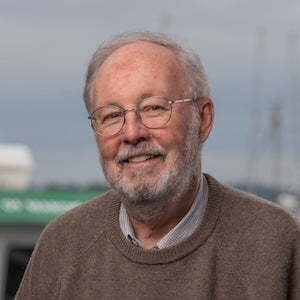
معرفی
Craig Young is a Professor of Biology at the University of Oregon, affiliated with the Oregon Institute of Marine Biology (OIMB). His research focuses on marine invertebrate larval biology, deep-sea and subtidal ecology, and reproductive strategies of marine organisms. He investigates topics such as larval dispersal mechanisms, symbiotic relationships, and the impacts of environmental changes on marine ecosystems.
His work integrates field expeditions, laboratory studies, and computational modeling to understand biodiversity in extreme environments like hydrothermal vents and methane seeps. Recent projects include analyzing volcanic ash effects on deep-sea communities and characterizing novel species from Gulf of Mexico seeps. Young has collaborated on interdisciplinary research funded by grants addressing larval connectivity, deep-sea biogeography, and oceanographic influences on recruitment patterns.
- Key Research Themes: Developmental biology, marine invertebrate diversity, deep-sea ecology, larval dispersal, hydrocarbon seep ecosystems.
- Funding Highlights: Collaborative NSF grants on seep mussel connectivity (2010), larval dispersal modeling (2019), and symbiont-larval interactions at hydrothermal vents (2018).
Publications since 2020 have explored larval behavior, methane ice worms' microbiomes, and the ecological roles of echinoderms as host organisms. His lab develops tools like the SyPRID sampler for precision deep-ocean plankton sampling, enhancing understanding of meroplankton dynamics. Young's work bridges basic science with conservation, addressing threats like microplastic pollution and climate-driven changes in ocean environments.