معرفی
Colleen Delaney is an Assistant Professor in both the Department of Mathematics and Department of Physics and Astronomy at Purdue University's College of Science. Her interdisciplinary work bridges advanced mathematics and theoretical physics, focusing on topological quantum phenomena with applications to quantum computation and condensed matter systems. She holds joint appointments reflecting her dual expertise in mathematical structures and physical implementations of topological order.
Her educational background includes:
- PhD in Mathematics from UC Santa Barbara (2019)
- MS in Mathematics from UC Santa Barbara (2016)
- BS in Physics from Caltech (2013)
Delaney's research centers on topological quantum field theory and fusion categories, investigating categorical symmetries, anomalies, and algebraic combinatorics in quantum systems. She develops mathematical frameworks for topological phases of matter, with emphasis on quantum computation applications including anyon models and topological quantum error correction. Her work connects abstract category theory to physical phenomena in condensed matter physics through rigorous computational methods.
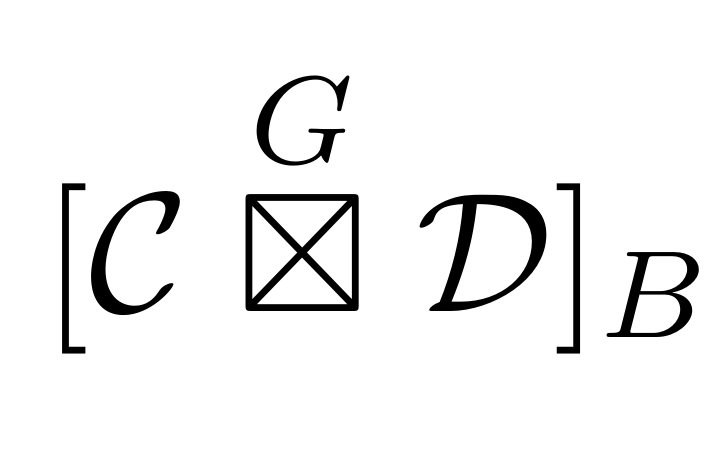
Her publication record reveals consistent focus on zesting constructions for braided fusion categories, quantum invariants of 3-manifolds, and topological aspects of quantum field theory. Recent work extends to Wilson loop diagram boundaries in N=4 SYM theory and efficient algorithms for Tambara-Yamagami invariants, demonstrating interdisciplinary reach across mathematical physics, topology, and quantum information science.
Her scientific recognition includes:
- Simons Collaboration Postdoctoral Research Fellowship
- NSF Postdoctoral Research Fellowship
- Microsoft Station Q Graduate Research Fellowship
Delaney actively mentors graduate students through research projects and specialized coursework, including the upcoming PHYS 570: Fusion Categories for Physics. Her teaching spans ordinary differential equations and advanced topics at the mathematics-physics interface, preparing students for research in theoretical physics. She has secured significant research support through competitive fellowships that fund her investigations into topological quantum matter.
She participates in the Simons Collaboration on Topological Quantum Matter, collaborating with leading researchers to advance understanding of topological phases and quantum computation. Her work integrates mathematical rigor with physical insight through regular participation in interdisciplinary workshops and research groups focused on category theory applications in physics.