معرفی
Clelia Gasparini is an Associate Professor in the Department of Biology at the University of Padova (UNIPD), where she leads a dynamic research group focused on evolutionary biology, sexual selection, and environmental impacts on reproduction. Her work spans gamete interactions, animal behavior, and ecological physiology, primarily using zebrafish, guppies, and cockroaches as model systems.
Her research interests center on three main themes: (i) the role of female reproductive fluid in post-mating sexual selection, (ii) the effects of climate change—particularly heatwaves—on animal behavior, cognition, and fertility across life stages, and (iii) the impact of PFAS pollution on aquatic organisms using integrated lab and field approaches. Her lab investigates how environmental stressors influence reproductive success, sexual selection dynamics, and transgenerational effects.
The recent publications highlight a strong trend in thermal biology and reproductive ecology, with multiple 2025 papers examining heat stress effects on embryonic development, juvenile anti-predator behavior, and adult cognitive traits in fish models. Earlier work established foundational insights into ovarian fluid-mediated sperm selection and cryptic female choice. These studies collectively reflect an integrative approach combining behavioral experiments, molecular analyses, and ecological modeling.
Scientific awards include the competitive STARS@UNIPD grant and a DECRA Fellowship, underscoring her research excellence. She also serves as an Associate Editor at Functional Ecology.
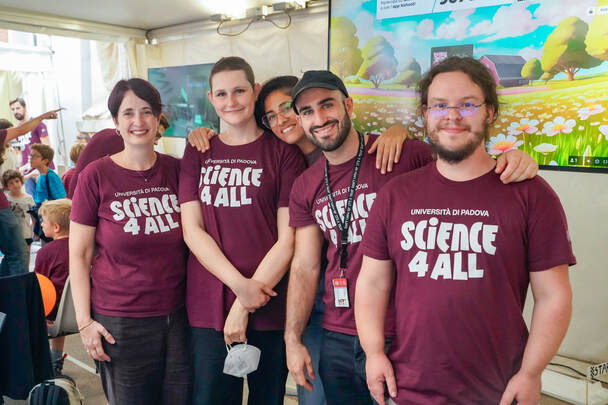
Clelia mentors several students and early-career researchers, including PhD candidates Livia Pinzoni and Merel Breedveld. Her collaborative network includes researchers from UNITU, UNIBO, and international institutions in Australia and the UK. She actively engages in outreach, such as the Science4all event at UNIPD, where her team showcased research through interactive games and animal displays. Her lab fosters a transparent, ethical, and inclusive environment that values work-life balance.
Current collaborative projects include a PRIN-funded study on PFAS-exposed mosquitofish with Marianna Pauletto (UNIPD), Giovanni Polverino (UNITU), and Andrea Barbarossa (UNIBO), and a microbiome-fertility study in guppies with Marco Graziano and Maria Elena Martino (UNIPD). She has hosted visiting scientists like Eugenia Zandonà (Brazil), Lily Amos (Liverpool), and Marissa Cartee (UC Riverside), enhancing the lab’s international profile.