معرفی
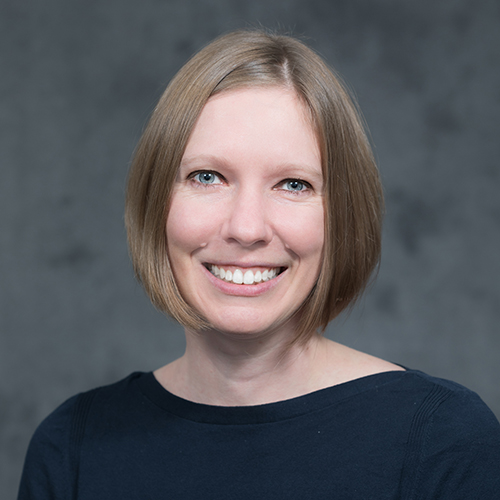
Claire Pettersen is an Assistant Professor in the Department of Climate and Space Sciences and Engineering (CLaSP) at the University of Michigan, College of Engineering. Her research is centered on cold-season precipitation processes, including snow, mixed-phase, and rain events, with a focus on cloud dynamics, thermodynamics, and synoptic-scale influences in mid- and high-latitude regions experiencing rapid climate change.
Her work lies at the intersection of atmospheric science and instrumentation, utilizing ground-based, airborne, and satellite observations. She leads the Cold Precipitation Processes Group and is the principal investigator of the NSF-funded S2noCliME (Snow Sensitivity to Clouds in a Mountain Environment) field campaign, which collected comprehensive data from December 2024 to April 2025 in Colorado and Utah. This multi-institutional effort involved teams from the University of Washington, University of Wisconsin, University of Utah, Colorado State University, and Stony Brook University.
Dr. Pettersen’s recent research trends emphasize machine learning applications in radar meteorology, cloud microphysics, and improving snowfall forecasting in mountainous regions. Her group develops and deploys advanced instrumentation, including scanning polarimetric radars, microwave radiometers, disdrometers, and radiosondes, to study cloud and precipitation processes in complex terrain.
Scientific Awards:
- Mercator Fellow, Arctic Amplification (AC)³ Project, German Research Foundation
Advising and Grants:
Dr. Pettersen has successfully advised multiple PhD students, including Yan Xie, Jack Richter, Tristan Rendfrey, and Julia Shates, all of whom have secured postdoctoral or academic positions. She leads a major $4.8M NSF-funded field campaign and collaborates extensively with NASA and NCAR. Her research is supported by federal grants focused on climate change impacts on snowpack and water availability.
Labs and Teams:
She leads the Cold Precipitation Processes Group at the University of Michigan and plays a central role in the S2noCliME field campaign team. Her group operates multiple ground-based instrument sites and collaborates with national laboratories and research centers to advance observational capabilities in atmospheric science.