معرفی
Dr. Christopher Wiebe is a Professor of Chemistry at the University of Winnipeg, affiliated with the Richardson College for the Environment and Science Complex. He holds a B.Sc. from the University of Winnipeg, M.Sc. and Ph.D. from McMaster University, and completed a postdoc at Columbia University. Previously, he served as faculty at Florida State University and the National High Magnetic Field Laboratory. He is a Fellow of the Royal Society of Chemistry and former CIFAR Quantum Materials Fellow. His research focuses on synthesizing and characterizing quantum materials, particularly magnetic materials using neutron/x-ray scattering. He leads PRIME, a CFI-funded institute for materials and energy research, equipped with advanced crystal growth and characterization tools. His work bridges fundamental condensed matter physics and sustainable technologies like energy storage. He has over 130 publications and serves on editorial boards such as the Journal of Physics: Condensed Matter.
Education:
- B.Sc., University of Winnipeg (1996)
- M.Sc., McMaster University (1998)
- Ph.D., McMaster University (2002)
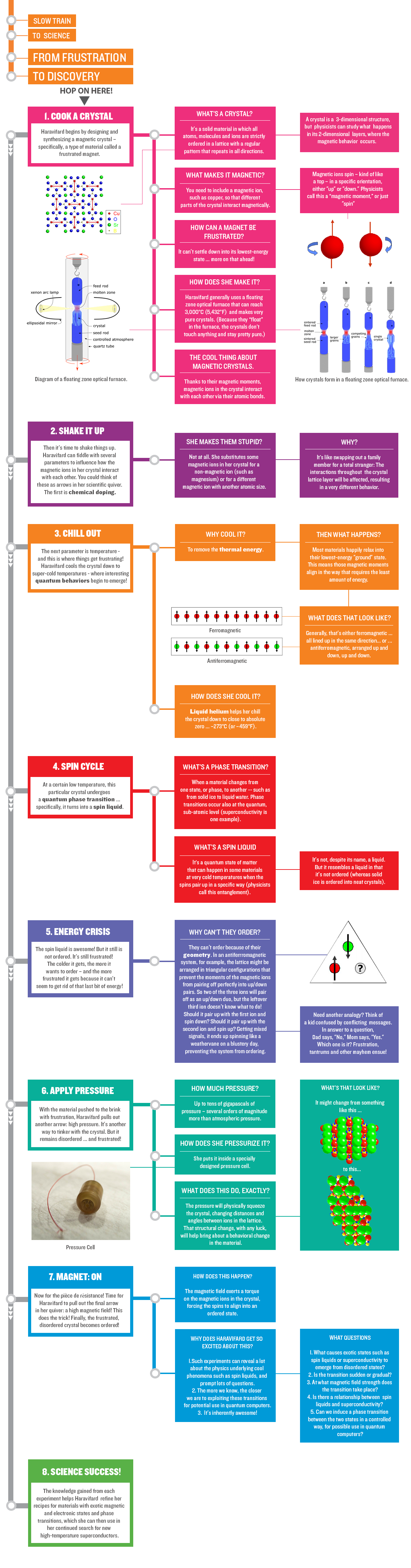
Research Interests: Dr. Wiebe’s work centers on discovering novel magnetic materials with applications in sustainability, including energy storage and advanced materials. His techniques include neutron/x-ray scattering and high-pressure synthesis. He explores quantum materials like spin ices, frustrated magnets, and superconductors. His PRIME institute aims to advance Canada’s materials science infrastructure.
Publications Overview: Recent work spans spin ice physics, quantum magnetism, and defect chemistry. Key themes include magnetic ordering in pyrochlore oxides, neutron/x-ray scattering applications, and quantum phase transitions. His articles often address practical applications alongside fundamental physics.
Grants & Labs: Secured $1M CFI funding for PRIME, directing its crystal growth and low-temperature magnet facilities. Collaborates nationally/internationally on neutron science initiatives. Served on boards like the Canadian Institute for Neutron Scattering and the National Magnetic Field Laboratory.