معرفی
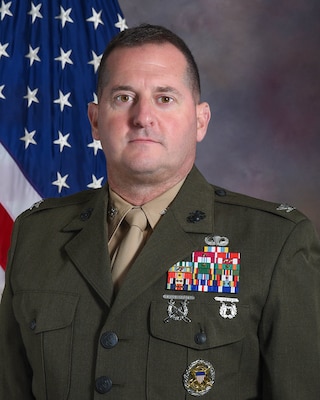
Christopher Paul is a professor of policy analysis at the RAND School of Public Policy and an adjunct social scientist at the RAND Corporation. He also holds the USMC Chair for Information at the Naval Postgraduate School, reflecting his deep involvement in military education and information warfare. His research supports the Department of Defense and U.S. Government on operations in the information environment, cyber operations, and related policy.
- Ph.D., M.A., B.A. in Sociology, University of California, Los Angeles
- Academic year 2001–02 on the UCLA statistics faculty
Christopher Paul's research focuses on information operations, military strategy, cyber warfare, counterterrorism, and psychological warfare. He has extensively studied counterinsurgency, strategic communication, and the role of information in modern conflict. His work explores how military and government actors can effectively inform, influence, and persuade foreign audiences, improve civil-military relations, and build partner capacity. He advocates for ethical influence operations and the rebranding of psychological operations to enhance credibility.
His recent publications cover topics such as operationalizing Air Force information warfare, organizing combatant commands for information warfare, ethical influence operations, and strategic competition with China and Russia. He has developed wargaming tools and frameworks for training military personnel in information operations. His research often combines sociological analysis with policy-relevant recommendations for defense institutions.
- Planning Ethical Influence Operations: A Framework for Defense Information Professionals
- Creating Selective Overmatch: An Approach to Developing Cyberspace Options
- Operationalizing U.S. Air Force Information Warfare
- Organizing for Information Warfare at Geographic Combatant Commands
- The Information Warfighter Exercise Wargame
Christopher Paul has advised on military training strategies, strategic communication frameworks, and defense acquisition processes. He has contributed to improving how the U.S. military builds partnerships, conducts urban operations, and manages public diplomacy. His work emphasizes the importance of aligning military actions with communication strategies to build legitimacy and public support.
He leads research projects on wargaming, simulation training, and the assessment of building partner capacity programs. At the Naval Postgraduate School, he contributes to shaping how the Marine Corps understands and operates in the information domain. His interdisciplinary approach bridges sociology, military science, and policy analysis to address complex national security challenges.
حوزههای پژوهشی