معرفی
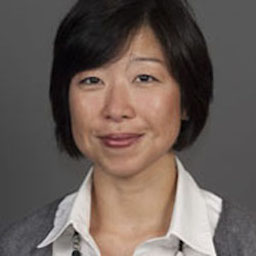
Christopher Lacey is a Lecturer and Japanese Teaching Fellow at the Language Centre, University of Leeds, within the Faculty of Arts, Humanities and Cultures. He serves as Deputy Director of Student Education and leads initiatives in language pedagogy, learner autonomy, and innovative assessment design. He coordinates non-Roman script languages and contributes to national curriculum development through the Pearson/Edexcel Languages Strategic Advisory Group.
Educational Background:
- MA in Advanced Japanese Language and Society, University of Sheffield
- BA (Hons) in Politics and History, Durham University
- Cambridge ESOL CELTA
- JLPT Level 1 (2006)
His research interests focus on enhancing learner autonomy through student-driven assessment and multimodal learning strategies. He actively explores optimal assessment forms and the integration of technology in language acquisition, particularly for Japanese scripts. His work supports Content and Language Integrated Learning (CLIL) frameworks and promotes co-creation in educational settings.
Christopher has delivered presentations at key language education conferences, including CERCLES and AULC, on topics such as out-of-class assessments and autonomy in learning. Though no formal research articles are listed, his contributions are practice-oriented and influential in teaching innovation.
Scientific and Professional Recognition:
- Inspirational Teaching Award nomination, Partnership Awards, University of Leeds (2015)
He has supervised and led educational projects but no formal PhD or Master’s students are listed. His leadership roles include Coordinator of Non-Roman Script Languages (2014–17, 2019–23) and Convenor of the Ab Initio Forum since 2018. He has been involved in significant professional translation and proofreading, including for the International Atomic Energy Agency and BBC Radio 5 Live.
Christopher is embedded in professional networks such as the British Association for Teaching Japanese (BATJ) and the Japan Association for Language Teaching (JALT), and contributes to educational policy and qualification frameworks at the national level.