معرفی
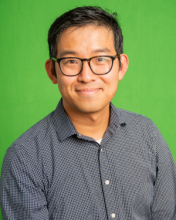
Christopher K. Uejio is a Professor of Geography & Public Health, Behavioral Sciences and Social Medicine at Florida State University, where he also serves as Director of Geography Graduate Programs. His research focuses on how the physical environment influences human health and well-being, with particular expertise in climate change impacts on public health.
Dr. Uejio earned his Ph.D. in Environmental Studies from the University of Wisconsin-Madison in 2011, following an M.A. in Geography from the University of Arizona (2006) and a B.S. in Atmospheric Science from UCLA (2004).
His primary research interests include public health, medical geography, climate variability, climate change, vulnerability assessment, health disparities, health interventions, environmental health, and infectious diseases. He is particularly known for his work on extreme heat events, which cause more U.S. deaths annually than any other weather hazard, and how to proactively target public health interventions to vulnerable populations.
His recent publications demonstrate a strong focus on climate change health impacts, with particular attention to heat exposure, wildfire smoke, tropical cyclones, and adaptation strategies. His work frequently employs spatial analysis and integrates earth observations to improve environmental exposure estimates for health studies.
Dr. Uejio has secured significant research funding from the Centers for Disease Control and Prevention, Environmental Protection Agency, Robert Wood Johnson Foundation, National Aeronautics and Space Administration, and National Oceanic and Atmospheric Administration.
He has advised numerous graduate students who have gone on to academic positions, including several assistant professors at universities across the United States. His laboratory conducts observational field studies and social surveys, with equipment for heat exposure and mosquito field studies.
Notably, Dr. Uejio is a co-author of the CDC's Building Resilience Against Climate Effects (BRACE) Framework, which was incorporated into the President's Climate Action Plan (2012). He works extensively with health departments to develop evidence for climate adaptation planning through the Climate-Ready States & Cities Initiative.