معرفی
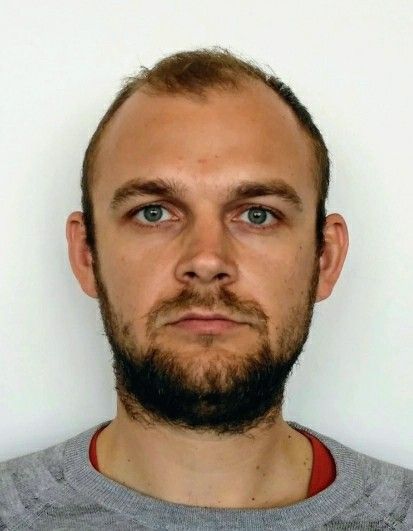
Christoph E. Düllmann is a prominent researcher in the Department of Superheavy Element Chemistry at GSI Helmholtzzentrum für Schwerionenforschung GmbH in Darmstadt, Germany. With numerous publications spanning from 2010 to 2025, he has established himself as a leading expert in the field of superheavy element research. His work primarily focuses on the chemical and physical properties of the heaviest elements in the periodic table, particularly those in the transactinide series.
Düllmann's research interests span nuclear chemistry, radiochemistry, superheavy elements, and gas-phase chemistry. His work frequently involves the development of novel experimental techniques for studying single atoms of extremely rare and short-lived elements. He has made significant contributions to understanding the chemical properties of elements 112-114 (copernicium, nihonium, and flerovium), investigating how relativistic effects influence their behavior compared to their lighter homologs in the periodic table. His research often combines experimental approaches with computational modeling to interpret complex data from single-atom-at-a-time experiments.
Recent publications demonstrate Düllmann's leadership in advancing methodologies for superheavy element research, including gas chromatography techniques, adsorption studies on various surfaces, and the development of simulation tools for predicting chemical behavior. His work on the chemical properties of nihonium and moscovium has provided crucial insights into how relativistic effects manifest in the chemistry of the heaviest elements. Düllmann's research group has also made significant contributions to target fabrication techniques, which are essential for producing superheavy elements in nuclear reactions.
Düllmann has been instrumental in numerous discoveries of new superheavy isotopes and has contributed to understanding the nuclear structure and decay properties of these exotic nuclei. His collaborative work spans multiple international research institutions, reflecting the global nature of superheavy element research.