معرفی
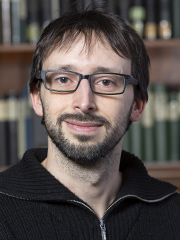
Christian Fendt is a Senior Scientist at the Max Planck Institute for Astronomy (MPIA) in Heidelberg, Germany, and an Adjunct Professor at Heidelberg University. He serves as Scientific Coordinator of the International Max Planck Research School (IMPRS) for Astronomy and Cosmic Physics. His research focuses on astrophysical jets and magnetohydrodynamic processes across cosmic environments, from young stars to active galactic nuclei.
Dr. Fendt completed his physics education at the University of Tübingen (Vordiplom 1986) and the University of Heidelberg (Diplom in Physics 1990, Dissertation in Astronomy 1994). His academic path includes postdoctoral positions at Lund Observatory (1994-1996), Max Planck Institute for Radioastronomy (1996-1997), and Astrophysikalisches Institut Potsdam (1997-2001), before joining MPIA in 2004. He was appointed Privatdozent at Heidelberg University in 2005 and promoted to Adjunct Professor in 2018.
Professor Fendt's research centers on magnetohydrodynamic (MHD) processes in astrophysical environments. His work investigates jet formation mechanisms through both analytical approaches and advanced numerical simulations. His group at MPIA has made significant contributions to understanding how magnetic fields, accretion disks, and outflows interact to produce jets. Current research includes investigations into general relativistic effects, particle acceleration mechanisms, and the connection between theoretical models and multi-wavelength observational data.
Analysis of his recent publications (2022-2025) reveals a continued focus on MHD simulations of astrophysical jets, with increasing attention to relativistic effects, non-ideal MHD processes like resistivity and dynamo action, and multi-wavelength observational signatures. His work spans from protostellar jets to relativistic jets from supermassive black holes, demonstrating universal jet formation mechanisms across different astrophysical scales.
Throughout his career, Professor Fendt has mentored numerous PhD and Master's students who have gone on to successful academic positions and careers in industry. His research has been supported by various funding agencies including the German Science Foundation (DFG), the Klaus Tschira Foundation, and the Heidelberg Graduate School for Physics. Current projects include investigations into relativistic jet dynamics, particle acceleration mechanisms, and the connection between accretion disk physics and jet launching.
At MPIA, Dr. Fendt leads the Astrophysical Jets research group within the Galaxies and Cosmology department. His team utilizes advanced computational resources to conduct magnetohydrodynamic simulations using codes like PLUTO, HARM, and ZEUS. The group maintains close connections with observational astronomers to ensure their theoretical work remains relevant to current and future observational facilities.