معرفی
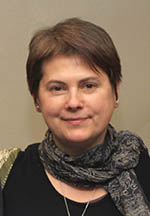
Chiara Certoma' is a Researcher at Sapienza University of Rome's Department of Methods and Models for Economy, Territory, and Finance, teaching courses including Global Networks and Local Economic Development and Political-Economic Geography. Her academic profile centers on critical analyses of globalization's socio-spatial impacts and environmental transformations.
Her research spans Urban Geography, Political Ecology, and Digital Social Innovation, with particular focus on urban gardening as political practice, environmental justice movements, and digital sustainability. She examines how grassroots initiatives like community container gardens challenge conventional governance models while addressing climate adaptation and social equity. Her work integrates material-semiotic approaches to explore post-environmentalism and socio-technical transitions in urban contexts.
Recent publications reveal a strong emphasis on digital-physical intersections in sustainability transitions, analyzing both promises and contradictions of digital technologies in urban governance. Her scholarship demonstrates consistent engagement with European policy frameworks while maintaining critical perspectives on power dynamics in environmental conflicts and energy transitions.
- Diversity & Collaboration Award, European Union’s Citizen Science Prize 2024 (for SeaPaCS project)
Certoma' leads participatory research initiatives including the SeaPaCS project on marine pollution and community container garden studies at Turin University. Her teaching emphasizes critical understanding of globalization's spatial implications, requiring students to engage with foundational texts by Massey, Sassen, and Martinez-Alier. While specific student supervision isn't documented, her research projects involve collaborative knowledge production with community stakeholders.
Her work connects with broader European research agendas on renewable energy social dimensions and urban climate politics, contributing to frameworks that bridge social justice concerns with sustainability transitions through engaged, practice-based methodologies.