معرفی
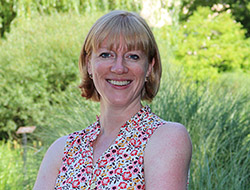
Cheryl A. Rogers serves as an Assistant Professor in the Department of Geography and Environmental Studies at Toronto Metropolitan University, where she leads research in remote sensing applications for carbon cycle monitoring. Her work leverages satellite-derived signals including vegetation indices, chlorophyll fluorescence, and multi-spectral data to quantify carbon sequestration across diverse ecosystems from temperate forests to peatlands and urban green infrastructure.
Her research program focuses on the intersection of satellite remote sensing and terrestrial carbon dynamics, with particular emphasis on developing novel methodologies to track vegetation's capacity for carbon dioxide removal. Key approaches include analyzing relationships between leaf chlorophyll content and photosynthetic efficiency, modeling carbon flux responses to climate extremes, and integrating multi-sensor satellite data (SAR, optical, LiDAR) with machine learning techniques. This work spans critical ecosystems including Canada's boreal forests, Hudson Bay Lowlands peatlands, and urban green roofs.
Analysis of her recent publication record (2023-2025) reveals three dominant research thrusts: (1) advancing remote sensing techniques for biomass and carbon stock mapping through multi-sensor data fusion, (2) modeling carbon cycle responses to climate change and extreme events using process-based simulations, and (3) developing new approaches for monitoring vegetation physiological processes through chlorophyll fluorescence and spectral indices. Her work consistently addresses climate mitigation challenges with practical applications for forest management and carbon accounting.
No scientific awards were documented in the provided source material.
Dr. Rogers contributes to academic advising as evidenced by her co-authorship of Academic Advising: A Comprehensive Handbook (2000). While specific current advisees and grant funding details were not disclosed in the available text, her active publication record indicates ongoing research mentorship and project leadership. Her work has significant implications for nature-based climate solutions including retention forestry practices and green infrastructure planning.