معرفی
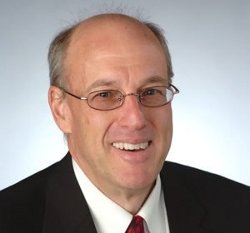
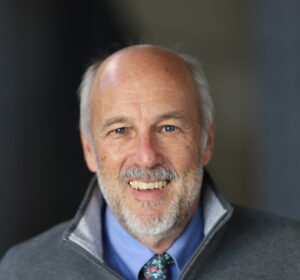
Charles T. Driscoll is a Professor at Syracuse University, holding the title of University Professor of Environmental Systems and a Distinguished Professor designation. He is affiliated with the Center for Environmental Systems Engineering and is a member of the National Academy of Engineering, a Fellow of the American Association for the Advancement of Science, and the recipient of the Clarke Prize. Driscoll’s research focuses on disturbances in forest, urban, freshwater, and marine ecosystems, including acid deposition, nitrogen, mercury, land-use changes, and climate impacts. His work emphasizes ecosystem recovery, decarbonization benefits, and harmful algal bloom mitigation.
Driscoll earned his Ph.D., M.S., and B.S. in Environmental and Civil Engineering from Cornell University (1980) and the University of Maine (1974). He teaches undergraduate and graduate courses in environmental engineering, sustainable systems, aquatic chemistry, and biogeochemistry. His lab engages students from multiple levels, prioritizing research dissemination through conferences and peer-reviewed publications.
His research interests include biogeochemical processes, climate change science, environmental modeling, ecosystem restoration, and limnology. Notably, he has contributed to over 530 peer-reviewed articles, cited over 55,000 times, with an h-index of 117. He has led UN reports on biodiversity and ecosystem services, and his recent work addresses mercury exposure in Peru and the US, nitrogen deposition in forests, and soil pH-microbe relationships.
Driscoll’s honors include the Clarke Prize Laureate (2024), Syracuse University’s Chancellor’s Lifetime Achievement Award (2020), and the Batsheva de Rothschild Fellowship (2015). His grants and advising focus on interdisciplinary environmental challenges, with students encouraged to address real-world problems. The Center for Environmental Systems Engineering serves as his primary research hub, exploring innovative solutions to complex environmental systems.